Marketing strategy Campaigns and the marketing calendar
Chinese New Year 2026: How Cosmetic Brands Should Plan Their Campaign in China
4 min read
On this page
Chinese New Year 2026 falls on February 17. The Year of the Horse. For cosmetic brands selling in China, this is not just a cultural moment, it is the single biggest retail event of the year. In 2025, Chinese consumers spent over 1.8 trillion RMB during the Spring Festival golden week. Beauty and personal care ranked among the top three gifting categories. If your brand is not ready six to eight weeks before the holiday, you are already late.
The rules of Chinese New Year marketing have changed since 2021. Consumers are more selective. They expect limited editions that feel genuinely special, not just a red label slapped on an existing product. Platforms like Xiaohongshu (Little Red Book) now drive discovery for beauty more than any other channel. And KOL costs have gone up while consumer trust in hard-sell content has gone down. Here is how to get it right in 2026.
Why Chinese New Year Still Dominates the Beauty Calendar
Spring Festival is not just a holiday. It is a gift economy compressed into two weeks. Chinese consumers buy cosmetics for themselves, for their mothers, for colleagues, for friends they visit during family rounds. The gifting culture around beauty is deeply embedded.
Tmall and JD.com both report that premium skincare and fragrance see 40-60% sales spikes in the three weeks leading up to CNY. In 2025, Lancôme, SK-II, and YSL Beauté all broke single-day sales records on Tmall during their CNY campaign windows. These are not accidents. They are the result of campaigns planned months in advance.
What makes CNY different from Double 11 or 618 is the emotional register. Consumers are not hunting bargains. They are buying gifts that carry meaning. A beautiful limited-edition packaging says something. It says “I thought of you.” That is the brief your campaign needs to answer.
CNY 2026: The Year of the Horse and What It Means for Packaging
The Chinese zodiac is not just decoration. It is a genuine design brief. In 2026, the Horse brings energy, movement, freedom, and boldness. Brands that interpret this well will sell. Brands that just print a horse silhouette on a box will look lazy.
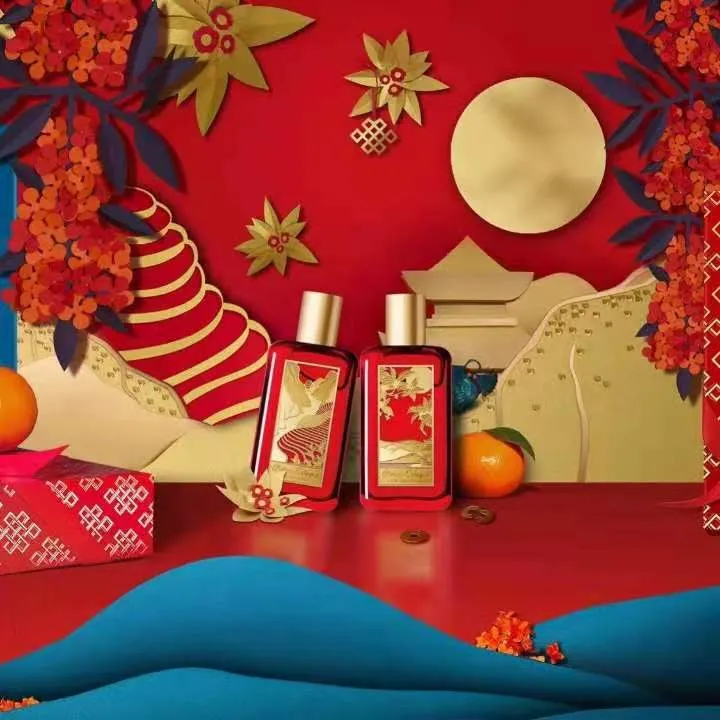
The best CNY packaging in recent years has gone beyond the animal motif. In 2024, Shiseido collaborated with a contemporary Chinese calligrapher for the Year of the Dragon. The result felt cultural, not costume. In 2025, Charlotte Tilbury released a Year of the Snake collection with jade-green and gold tones that leaned into Chinese aesthetics without being obvious.
For 2026, think about what the Horse represents symbolically: galloping forward, speed, ambition. These are values that resonate with younger Chinese consumers who see themselves as driven and aspirational. Red and gold remain the dominant CNY palette, but brands that add unexpected accent colors, deep emerald, burnt orange, or ink blue, stand out on shelf and on Xiaohongshu grids.
Practical tip: finalize your packaging design by August 2025 if you want Tmall flagship stores to list CNY SKUs in time for the pre-holiday campaign window starting in January 2026.
Which Platforms to Use for Your CNY Campaign in 2026
The platform mix has shifted significantly since 2021. Weibo is still relevant for announcements and celebrity partnerships, but it is no longer where discovery happens for beauty. Here is where you should focus:
Xiaohongshu (Little Red Book): This is the number one platform for beauty discovery in China right now. Over 300 million monthly active users, with beauty as the top content category. For CNY, brands should seed gift guide content, unboxing videos, and “gift for mom” narratives starting six weeks out. Authentic posts from micro-KOLs (10k-100k followers) perform better than celebrity posts on this platform.
Douyin: Short video drives impulse purchasing. CNY gift-set reveals, before/after skincare videos with CNY framing, and live-stream shopping events are all effective formats. Brands like Estée Lauder and Guerlain have used Douyin live commerce during CNY to clear large volumes in short windows.
WeChat: Still essential for CRM, loyalty programs, and H5 campaigns. A well-executed WeChat Mini Program can drive CNY gift card sales, bundle promotions, and brand storytelling content. Do not use WeChat as a broadcast tool. Use it to reward existing customers and deepen relationships.
Tmall and JD flagship stores: The transaction layer. Your CNY campaign on social channels should drive directly to your Tmall flagship. Make sure your store banner, product listings, and gift-set pages are updated and optimized before the campaign goes live.
KOL Strategy for CNY 2026: Quality Over Volume
In 2021, brands could run broad KOL seeding campaigns and see results. In 2026, the market is noisier and consumers are more skeptical. You need to be smarter.
The most effective approach we have seen is a three-tier structure. One or two top-tier KOLs (celebrities or mega-influencers) to create brand awareness and credibility. Ten to twenty mid-tier KOLs (100k-1M followers) to drive consideration with detailed reviews and tutorials. Fifty to one hundred micro-KOLs or real-user seeding to generate the volume of authentic content that feeds Xiaohongshu’s algorithm.
For CNY specifically, content that performs well includes: “CNY gift ideas under 300 RMB,” “what I bought my mom for Spring Festival,” and “unboxing the best CNY limited editions 2026.” These formats feel personal. They answer real questions Chinese consumers are typing into Xiaohongshu’s search bar.