Beauty categories Baby, kids and mothers
The Maternal and Infant Wash Care Market in China
6 min read
On this page
The maternal and infant wash care segment is one of the most competitive I’ve seen. High regulatory pressure, sophisticated parents, and brutal price competition on Tmall. But it’s also one of the most resilient. In 2026, the market continues to grow, and brands that understand Chinese mothers are winning big.
Here is what I see on the ground, and what it means for foreign brands looking to enter or scale in China.
Regulation First: The Rules Have Changed
Policy Direction: As a segment of the cosmetics market, maternal and infant wash care products are moving towards standardization under the trend of stricter cosmetics regulation. Since 2021, the focus of the cosmetics industry’s regulation has been on product safety and the compliance of marketing claims. With the release of the “Child Cosmetics Supervision and Management Regulations” on October 8, 2021, the child cosmetics industry entered an era of independent regulation. This regulation, China’s first specific regulatory document for child cosmetics, stipulates labeling requirements and other regulations related to child cosmetics that took effect from January 1, 2022.
The “Child Cosmetics Supervision and Management Regulations” comprises 22 articles that strictly regulate the safety of child cosmetics, covering definition, labeling, formulation principles, safety assessment requirements, production and operation (including online), registration and record management, production supervision, and random inspection monitoring. In formulation design, the principles of “safety first, necessary efficacy, and minimal formulation” must be followed.
Compliance is not optional. Regulators are checking claims on e-commerce platforms. A single non-compliant ingredient listing or an overclaimed efficacy statement can get your product delisted overnight. Get your NMPA registration right from day one.
Demographics: The Dragon Year Effect and What Comes After
Changes in Consumer Demographics: According to the “2022-2028 China Maternal and Infant Wash Care Industry Market Panorama Survey and Investment Potential Research Report” by Zhiyan Consulting, a series of fertility policies have been introduced in recent years in response to population aging and to improve China’s population structure. Policies such as the “two-child policy” in 2011, the “single-child two-child policy” in 2013, and the full implementation of the two-child policy in 2016 were introduced, but these did not fundamentally improve the birth rate. In 2020, the number of births in China decreased to 12 million, down 2.65 million from 2019, a decline of 18.1%, marking the lowest since the founding of new China. China then introduced the three-child policy on May 31, 2021, with a series of supporting policies.
2024 was a Dragon Year. In Chinese culture, Dragon Years bring good luck for births. The effect was real: birth registrations spiked in Q1 and Q2 2024. That cohort of babies is now 18 to 24 months old in 2026. Diaper brands felt it first. Skincare and wash care brands are feeling it now. The demand curve shifted forward by about 18 months.
As China’s per capita disposable income has continuously increased, the level of consumption upgrade in the maternal and infant industry has been driven. This upgrade comes from two directions: rising income levels and more individualized consumer needs. The development of new media marketing platforms has also effectively promoted the output of maternal and infant consumption concepts.
Market Size: Where the Numbers Stand
The China maternal and infant wash care market reached approximately 42 billion RMB in 2025. Projections for 2026 put it above 46 billion RMB, driven by premiumization and the Dragon Year birth cohort aging into higher-spend categories. Average spend per child on wash and skincare products has increased by roughly 23% since 2022. Chinese parents, especially in Tier 1 and Tier 2 cities, now budget more for baby personal care than for their own skincare.
A bottle of baby shampoo that sold for 39 RMB in 2020 now competes at 89 to 120 RMB for imported or “clean beauty” positioned products. The low-price segment is shrinking. The mid-to-premium segment is where the volume is moving.
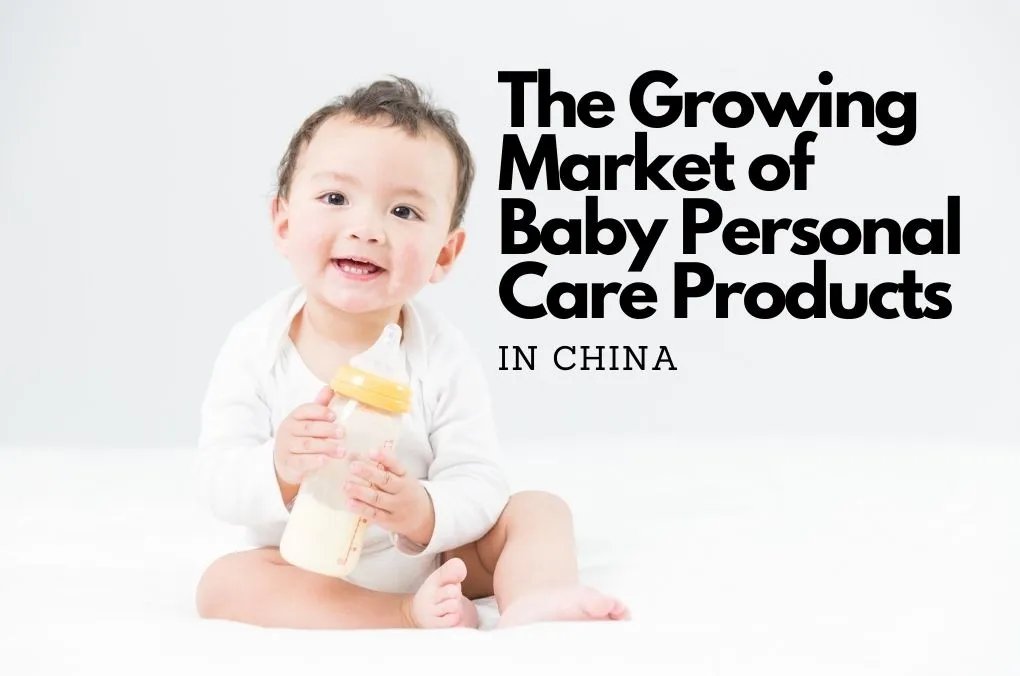
China Baby Product Market: Chinese Parents Prefer to Buy From International Brands!
Ingredient Trends
Chinese parents read ingredient lists. This is not 2015. They know what sodium lauryl sulfate is. They know what parabens are. They cross-reference ingredient lists on Xiaohongshu before they buy.
The winning ingredient story in 2026 has three elements. First, clean and minimal formulations. Short INCI lists perform better than long ones. “Only 8 ingredients” is a marketing claim that works. Second, traditional Chinese plant-based ingredients. Calendula, peach blossom extract, and lotus root are all performing well in product positioning. They resonate culturally and support the safety narrative. Third, microbiome-friendly claims. “Maintains skin barrier,” “pH-balanced,” and “microbiome-compatible” are phrases that Chinese mothers in Tier 1 cities respond to. We saw three clients reposition their baby wash with microbiome messaging in 2025 and get significant organic traction on Xiaohongshu within 60 days.
To understand how to position your product correctly from a cosmetics marketing in China perspective, ingredient storytelling is your first lever.
Where Chinese Mothers Discover Baby Wash Products
The discovery journey has shifted. In 2022, Tmall was the starting point. In 2026, it’s Xiaohongshu and Douyin. A mother sees a post from a parenting KOL, reads the comments, goes to Tmall to buy. That is the standard funnel now.
Xiaohongshu is the highest-trust platform for this category. Mothers share real feedback, real photos of rashes and skin reactions. Negative reviews spread fast. Positive peer-to-peer reviews build real purchase intent. I always recommend brands build their Xiaohongshu presence before they scale paid ads. Organic credibility on XHS converts better than cold traffic from search.
Douyin is a different game. It’s volume and conversion speed. Short videos showing product texture, lather quality, and baby reactions perform well. Live commerce on Douyin for baby wash is exploding. Brands doing 8 to 10 live sessions per month on Douyin are seeing consistent sell-through, even without celebrity KOLs. If you want reach and speed, Douyin advertising is where to invest in 2026.
On Tmall, the maternal and infant category is competitive but manageable if you optimize properly. Search ranking for terms like “baby shampoo no sulfate” or “infant body wash sensitive skin” is expensive but worth it in the first 90 days to build sales velocity. After that, organic reviews sustain the ranking.
What Foreign Brands Get Wrong
I see the same mistakes every year. First, brands launch on Tmall with no Xiaohongshu presence and wonder why traffic is poor. Second, brands translate their European packaging claims directly into Chinese without checking regulatory compliance. Third, brands use celebrity KOLs for launch campaigns and burn budget without building lasting community. Fourth, brands price too low because they fear competition from local players like Frog Prince or Pigeon. Pricing too low signals low quality to Chinese mothers. It is the wrong signal in a premium-seeking market.
The brands that succeed are the ones that build trust first. Certification, clean ingredients, peer reviews on Xiaohongshu, and a real customer service presence on WeChat. That foundation supports everything else.
How to Enter or Scale
If you are entering the China maternal and infant wash care market in 2026, here is the order I recommend. Get your NMPA registration complete. Build your Xiaohongshu brand account and seed it with 30 to 50 real product reviews from mother KOLs. Open your Tmall flagship or Tmall Global store. Run Douyin live commerce two to three times per week. Use WeChat for customer retention and loyalty. This is a six to nine month build. There is no shortcut.
If you are already in China and want to scale, the focus in 2026 should be Douyin live commerce and Xiaohongshu community depth. These two channels are where the market is growing fastest in this category.