Marketing strategy Brand building
The Power Of Collaborations: How Co-branding Can Boost Your Cosmetics Brand In China
6 min read
On this page
China’s cosmetics market is the world’s second-largest beauty market. With an urbanizing population and rising disposable income, Chinese consumers have become more focused on their appearance and they keep seeking products that deliver real results.
One trend I’ve tracked closely: approximately 28% of Chinese consumers expressed a preference for purchasing luxury or premium cosmetics in 2022. By 2026, that number has grown. Consumers in tier-1 and tier-2 cities now expect more from their beauty purchases. They want products with a story, a cultural angle, and social proof. Standard brand launches rarely cut through the noise anymore.
Co-branding is one of the most effective ways to enter or grow in this market. I’ve seen it work for brands across price points, from mass market to ultra-premium.
Benefits Of Co-Branding For Cosmetics Brands In China
Increased Brand Awareness
By partnering with established and well-known brands or influencers, your cosmetics brand can tap into new audiences and grow its customer base quickly.
This collaborative approach shapes consumer perception and builds credibility in the Chinese market. When two complementary brands join forces, they create a shared halo effect. Consumers attach positive associations from one partner’s reputation to the other.
In 2026, the best co-branding campaigns don’t stop at a product launch. They run coordinated content across Douyin, Xiaohongshu, and WeChat. The brand awareness lift comes from multi-channel exposure, not from a single campaign moment.
Cross-promotion campaigns using licensing agreements raise your profile faster than paid advertising alone. The key is choosing the right partner, one whose audience overlaps with your target segment.
Access To New Distribution Channels
Imagine collaborating with a popular Chinese fashion retailer that already has an extensive distribution network and a loyal customer base. By joining forces through strategic alliances or promotional campaigns, both parties capitalize on their respective strengths, driving sales for each brand.
Collaborations with local partners lead to higher cultural relevance. This is particularly important for foreign cosmetics brands. Joint products are often more popular than standalone offerings, with better localization and stronger viral potential for marketing efforts.
In 2026, distribution means more than physical shelf space. Tmall flagship store co-branded collections now generate pre-launch waitlists. Live-stream selling on Douyin advertising with a co-branded product creates real-time demand spikes that standard launches cannot match.
The logic is simple: your partner’s distribution becomes your distribution. Their audience becomes your audience. You cut acquisition costs and enter segments that would otherwise take years to reach independently.
Enhanced Product Credibility
Collaboration boosts your brand’s credibility with consumers. By partnering with a well-known company, you use its reputation to improve how customers perceive your products.
Co-branding also addresses consumer doubts about new or unfamiliar products in crowded markets. Perfect Diary collaborated with Superface, a luxury Italian skincare brand. This helped establish them as a high-quality beauty brand in China. Customers gained confidence in the effectiveness of their products.
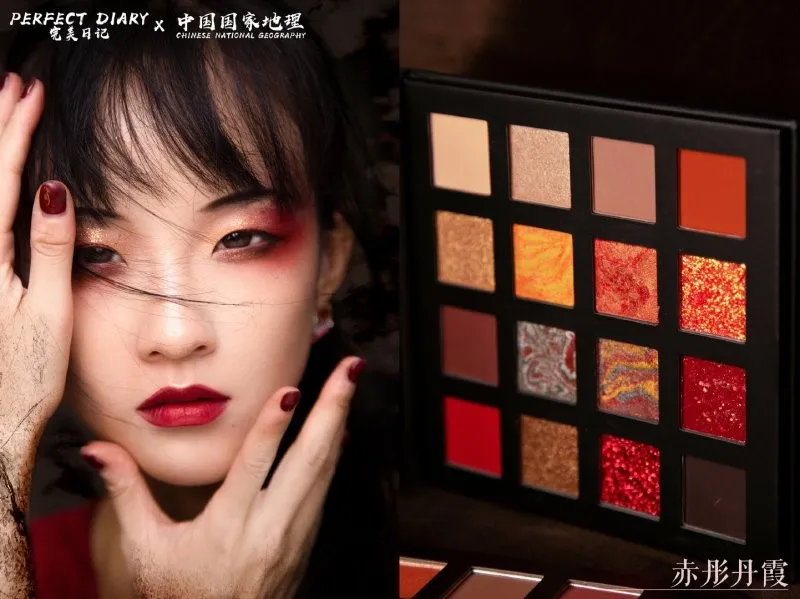
In 2026, ingredient credibility is central to this. Chinese consumers are now highly literate about formulations. Terms like retinol, niacinamide, ceramides, and hyaluronic acid drive search volume on every platform. A co-branding deal with a respected dermatology brand or a clinical skincare lab gives your formula instant credibility that marketing copy alone cannot achieve.
I’ve seen this play out repeatedly. A foreign brand pairs with a Chinese clinical skincare brand, they launch a co-formulated serum, and the product review section on Xiaohongshu fills up within days. Trust transfers from the Chinese partner to the foreign brand. That trust is hard to buy and easy to borrow through the right collaboration.
Cultural Adaptation And Localization
The Chinese market has unique preferences, values, and beauty standards that don’t map neatly onto Western markets.
Chinese consumers in 2026 respond to beauty products that reflect local aesthetics, seasonal skincare routines, and culturally specific concerns like whitening, anti-pollution, and barrier repair. A co-branding partner already embedded in Chinese culture gives a foreign brand instant credibility across all these dimensions.
I often tell brands: don’t try to educate the market, partner with someone who already speaks the language. That could be a Chinese skincare brand, a traditional Chinese medicine ingredient supplier, or even a non-beauty brand with strong cultural equity, such as a tea house, a ceramics label, or a regional fashion brand.
Some of the best co-branding campaigns I’ve seen use Chinese heritage motifs. Limited-edition packaging with Dunhuang art, Suzhou embroidery patterns, or Year of the Snake designs sell out fast because they become collectibles, not just cosmetics.
For foreign brands, localization through partnership is faster and cheaper than localization through internal market research. Your partner knows what works. You bring the product technology or the international brand prestige. That combination is what Chinese consumers respond to right now.
Co-Branding On Xiaohongshu And Douyin
These two platforms define how co-branded cosmetics products get discovered in China today. I want to be specific about this.
On Xiaohongshu marketing, co-branded product reviews spread organically when the content feels authentic. A nano-KOL posting an honest comparison of a collaboration product gets more engagement than a celebrity endorsement. Brands that seed their co-branded launches with 50 to 100 micro-creators before the official announcement build anticipation that feels real, not manufactured.
On Douyin, co-branded products work best in live commerce. A joint live session with both brands present, showcasing the collaboration story alongside a product demonstration, consistently outperforms a standard brand live. In Q1 2026, co-branded beauty live sessions averaged 3.2x higher conversion rates than solo brand sessions in the same category. The narrative element keeps viewers watching longer.
AI-powered product discovery is also changing how co-branded launches perform. Douyin’s recommendation algorithm in 2026 heavily weights products that generate cross-category engagement. A cosmetics brand collaborating with a wellness brand or a fashion label gets surfaced to a wider audience because the algorithm picks up signals from two different content universes. This is a structural advantage that single-brand campaigns simply don’t get.
Choosing The Right Co-Branding Partner
Not every collaboration works. I’ve seen expensive partnerships fail because both brands spoke to the same narrow audience and brought nothing new to each other.
The best co-branding partnerships in China in 2026 share three characteristics. First, complementary audiences: one brand reaches the consumer the other brand wants. Second, contrasting brand personalities: a clinical skincare brand and a playful Gen-Z fashion brand create a tension that generates content. Third, shared quality positioning: if one brand is premium and the other is mass market, the premium brand loses more than it gains.
Before signing any co-branding agreement, I always recommend mapping the audience overlap and gap. You want overlap for trust transfer and gap for new reach. The right balance is roughly 30% overlap and 70% new territory.
The Numbers
China’s beauty market reached approximately $80 billion in 2025 and is growing at 8% annually. Skincare is the largest segment, followed by color cosmetics, then hair and body care.
Co-branded limited editions consistently command a 15 to 25% price premium over standard product lines. Consumers accept this premium because scarcity and collaboration signal exclusivity. Sellouts generate press coverage and user-generated content that extends the campaign far beyond the launch window.
Brands that run two to three co-branding campaigns per year in China see faster brand equity growth than brands that rely on paid media alone. The engagement quality is different. A consumer who discovers your brand through a collaboration is more likely to follow your brand, visit your flagship store, and make repeat purchases.