Social media Xiaohongshu (RedNote)
Xiaohongshu eCommerce: 6 Reasons RED Stores Are the Best Place to Sell Cosmetics in China
5 min read
On this page
- Xiaohongshu: Built for Beauty and Fashion
- Xiaohongshu users are the main consumers of luxury cosmetics
- Chinese luxury cosmetics consumers rely on Xiaohongshu recommendations and reviews
- KOLs on Xiaohongshu are the best influencers of Chinese luxury cosmetics consumers
- Xiaohongshu is a UGC platform with makeup tutorials and educational content
- Xiaohongshu live streaming is the best way to promote luxury cosmetics
- RED’s Lower Commission Drives Sales on the Platform
If you want to sell cosmetics in China, Xiaohongshu’s RED Store is one of the strongest options available. The platform combines a massive, highly targeted user base with an integrated marketplace. Users discover products, read reviews, watch tutorials, and buy, all without leaving the app. For beauty brands, that funnel is hard to match.
But 2026 is not 2022. The platform has matured, the competition is tighter, and Chinese consumers are sharper. Here is what you need to know before you open a RED Store.
Xiaohongshu: Built for Beauty and Fashion
Also known as “Little Red Book”, Xiaohongshu is among the most popular Chinese social e-commerce platforms, alongside WeChat and Douyin. It integrates social media with e-commerce through the RED Mall section. Users get a social experience and can purchase products without switching apps.
Xiaohongshu is a word-of-mouth marketing platform where consumers discover and buy international products based on trusted user-generated content, including recommendations and reviews.
The platform is open. Anyone can browse its content without registering. The homepage algorithm shows posts based on user preferences, collected when the app is first opened. It also surfaces content from accounts the user follows and from nearby creators.
Founded in 2013, Xiaohongshu was built so women could share recommendations on foreign fashion and cosmetics. That DNA is still visible today. The platform now has over 300 million registered users, with more than 70% under 30. The gender split is roughly 70% women, 30% men, and the male share is growing.
Xiaohongshu users are the main consumers of luxury cosmetics
In China, the biggest consumers of luxury cosmetics are young women under 35. That is the core Xiaohongshu demographic. No other platform concentrates this audience so precisely.
Key figures: 72% of users were born after 1990, and 50% live in first and second-tier cities. They have disposable income and they spend it on beauty, often on foreign brands. This is the audience your brand needs to reach.
Xiaohongshu’s content algorithm lets posts from accounts the user does not follow appear in the feed. A post with strong engagement can go viral. The platform rewards authenticity and useful content, not raw ad spend.
Chinese luxury cosmetics consumers rely on Xiaohongshu recommendations and reviews
Reviews drive purchasing decisions in China more than almost anywhere else. Chinese consumers are cautious about brands they do not recognise. A famous name in Europe or the US means nothing to a 25-year-old in Chengdu if she has never seen it in her feed.
Data confirms this: 54% of Chinese consumers validate product quality through reviews before buying, compared to 47% globally. After buying, 27% write their own review, versus 20% globally. That feedback loop is what makes Xiaohongshu so powerful for cosmetics.
Xiaohongshu functions like a conversation between friends. Older users and KOLs share recommendations, newer users read and comment. The engagement is genuine. That is why recommended products get disproportionate exposure on this platform.
Social listening on Xiaohongshu is also valuable. Notes and comments reflect real first-hand experience. Read them and you understand what young Chinese women actually want, not what a focus group says they want.
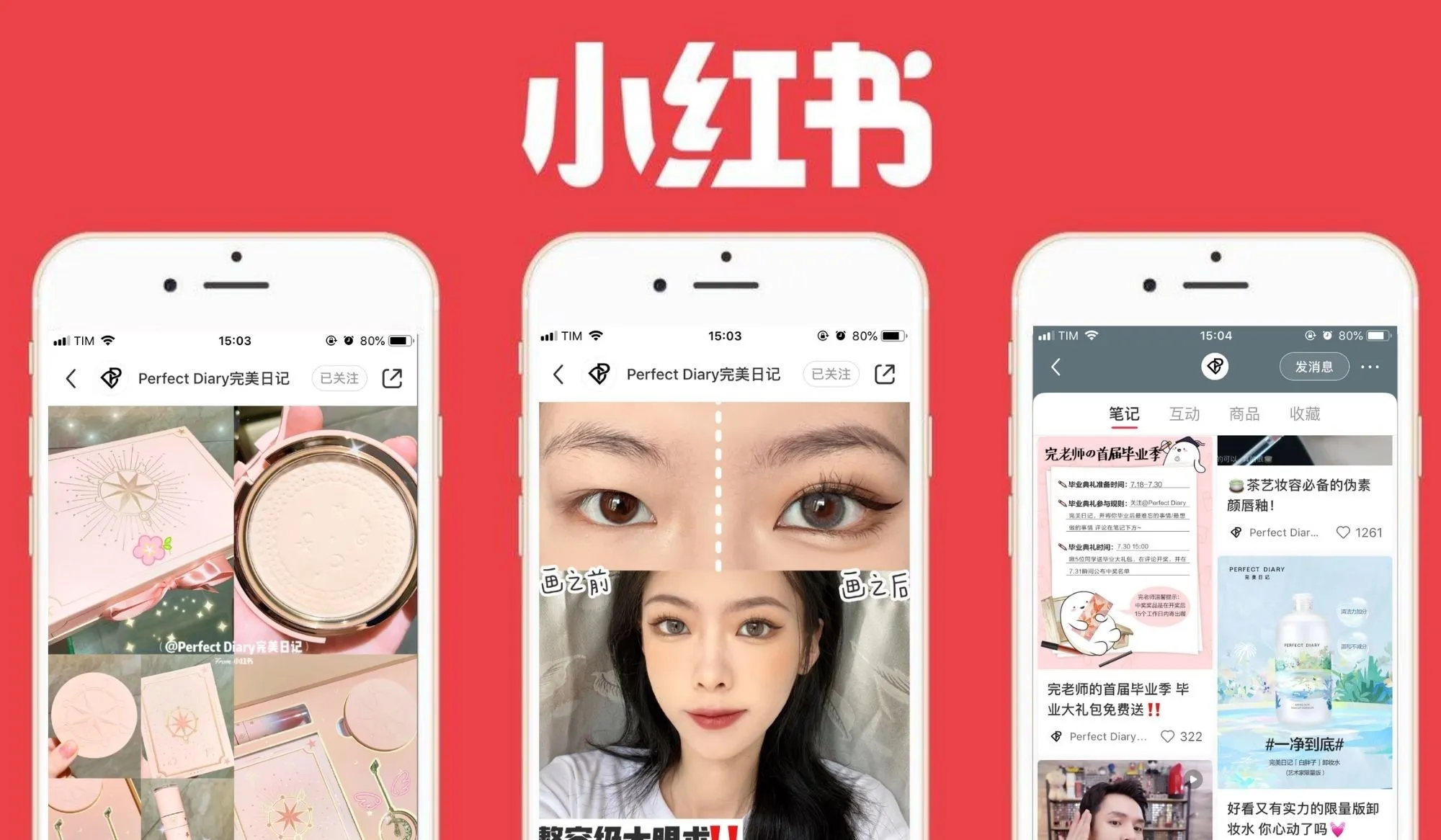
Unlike WeChat, which restricts incentivised sharing, Xiaohongshu welcomes promotional content. Brands like Perfect Diary routinely ask users to like, comment, and post photos to enter lucky draws. That engagement loop builds community and data at the same time.
KOLs on Xiaohongshu are the best influencers of Chinese luxury cosmetics consumers
An official brand account on Xiaohongshu signals legitimacy. Chinese consumers, especially younger ones, check whether a brand exists on the platform before buying. No account means no trust.
KOL campaigns on Xiaohongshu combine a few top-tier creators with many smaller ones. Perfect Diary worked with over 150 KOLs to launch Daydream in 2019. The model has not changed, but the bar has raised. Consumers can spot scripted content. Authentic reviews from real users convert better than polished brand posts.
Every user on Xiaohongshu is a potential micro-influencer. When someone with 5,000 followers posts an honest review of your serum, her audience trusts her. That trust transfers to your brand. Do not ignore small creators. They often outperform the big names on conversion.
Xiaohongshu is a UGC platform with makeup tutorials and educational content
Tutorials, application guides, ingredient explainers, this is the content that performs on Xiaohongshu. The platform was built as a shopping guide, and that purpose still shapes what users engage with.
Static posts showing how to apply a product are effective. Short videos and live streams perform even better. If you can show your product in use, through a real person, in natural lighting, you are ahead of most competitors on the platform.
Xiaohongshu live streaming is the best way to promote luxury cosmetics
Live streaming is not a trend in China. It is standard retail infrastructure. Brands that do not invest in live commerce are simply absent from a major buying channel.
Xiaohongshu’s live streaming feature lets brands demonstrate products in real time, answer questions directly, and build the kind of trust that static content cannot. Cosmetics are a natural fit: texture, coverage, scent descriptions, before-and-after, all of this plays well on live video.
For your brand, a regular live schedule on Xiaohongshu, combined with KOL co-streams, is one of the most direct ways to drive sales inside the platform.
RED’s Lower Commission Drives Sales on the Platform
Xiaohongshu is essential for reading and writing product reviews, but users can also purchase directly through the “link-to-buy” feature inside posts and videos.
Historically, users discovered products on XHS and then bought on Tmall or WeChat mini-programs. Xiaohongshu addressed this by cutting its platform commission from 20% to 5%, matching what Tmall charges in fashion and cosmetics. When the traffic comes from Xiaohongshu ads, that commission drops further to 3%.
This makes RED Stores genuinely cost-competitive for merchants. The platform is actively working to keep users inside the purchase loop rather than sending them elsewhere. For cosmetics brands, that is a significant structural improvement since the early days of the platform.
The opportunity on Xiaohongshu is real. So is the competition. Foreign brands that move fast, build consistent content, and connect their XHS presence to Tmall and Douyin are the ones taking market share right now.