On this page
- How China’s Beauty Market Has Changed
- Top 20 Most Popular Makeup Brands In China
- 1. L’Oréal
- 2. Estée Lauder
- 3. Lancôme
- 4. Dior Beauty
- 5. MAC
- 6. Chanel Beauty
- 7. Shiseido
- 8. SK-II
- 9. Armani Beauty
- 10. YSL Beauty
- 11. Charlotte Tilbury
- 12. NARS
- 13. Bobbi Brown
- 14. Perfect Diary (完美日记)
- 15. Florasis (花西子)
- 16. Judydoll (橘朵)
- 17. Colorkey (珂拉琪)
- 18. INTO YOU
- 19. Givenchy Beauty
- 20. Maogeping (毛戈平)
- What This Means If You’re Entering the China Market
When I started, the space was dominated by a handful of Western giants with big budgets and limited local knowledge. Today the picture is completely different. Chinese domestic brands have gone from copying to competing, and in color cosmetics, some are winning outright.
The China cosmetics market was valued at $44 billion in 2020 and reached roughly $70 billion by 2025. In 2026, figures from major industry trackers put it closer to $80 billion, driven by Gen Z spending habits, the Douyin commerce explosion, and a generation of consumers who research ingredients before they buy.
This list covers the 20 brands I see performing consistently in China, both international and domestic. What separates the ones that work from those that struggle is not just product quality. It’s the ability to show up on the right platforms, speak clearly to Chinese consumers, and adapt faster than the market moves.
How China’s Beauty Market Has Changed
Before getting into the brand list, three shifts matter more than anything else for understanding today’s market.
First, Douyin is now a primary sales channel, not just a discovery tool. Brands that built strong Douyin livestream teams between 2023 and 2025 are seeing compounding returns. The entry barriers are lower than they were two years ago, but the competition is also fiercer.
Second, Xiaohongshu (Little Red Book) has become the primary research platform for beauty consumers. Chinese women aged 18-35 use it the way Western consumers use Google for beauty research. They search for “lip tint recommendation 2026” or “best foundation for oily skin” and read dozens of peer reviews before buying anywhere. Xiaohongshu marketing is no longer optional for brands that want to build category authority.
Third, the “成分党” (ingredient-conscious consumer) trend has moved from niche to mainstream. Consumers check INCI lists, compare niacinamide concentrations, and ask about parabens and fragrance. Brands that communicate formulation credibly, in Chinese, on the right platforms, win trust faster than brands relying on image alone. This applies to both international and domestic brands.
Top 20 Most Popular Makeup Brands In China
1. L’Oréal
L’Oréal has achieved consistent success in China by focusing on quality, innovation, and customer experience. The brand understands the Chinese consumer and meets their needs with a wide product range. Its makeup and skincare products have earned trust through reliable quality across price points.
The brand collaborates regularly with popular Chinese celebrities and KOLs. It maintains active presence on Weibo, WeChat, Douyin, and Xiaohongshu, providing beauty tips and product information that reach consumers across platforms.
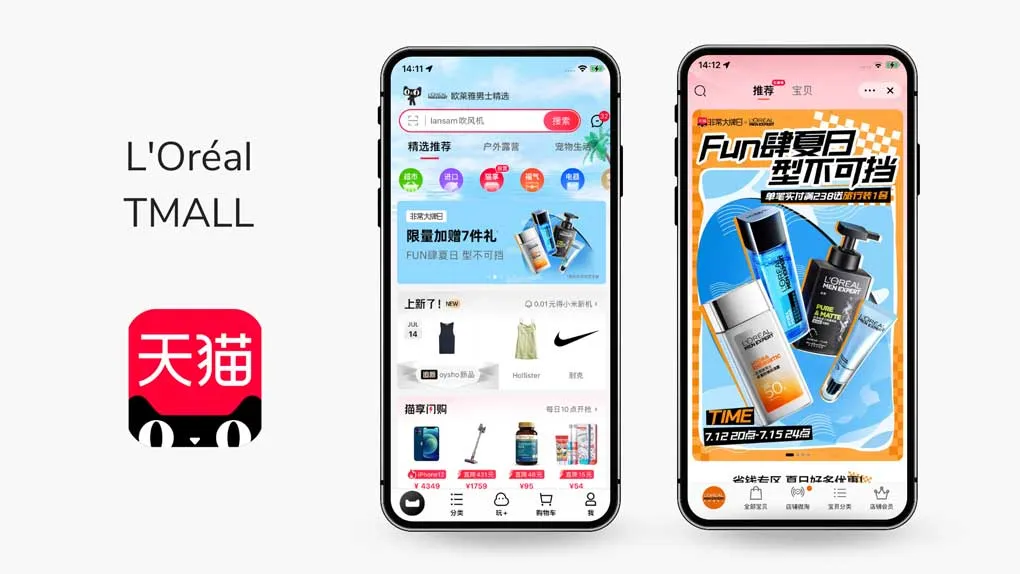
In my experience, L’Oréal’s biggest strength in China is speed. When a new platform gains traction, L’Oréal is there within months with adapted content. Their AI-powered beauty try-on tool, integrated into their Tmall flagship store, has been one of the more effective conversion drivers in the mid-range category. L’Oréal also participates aggressively in 618 and Double 11 with discount mechanics that move serious volume. Some products sold in China are manufactured domestically, which helps with pricing and lead time.
2. Estée Lauder
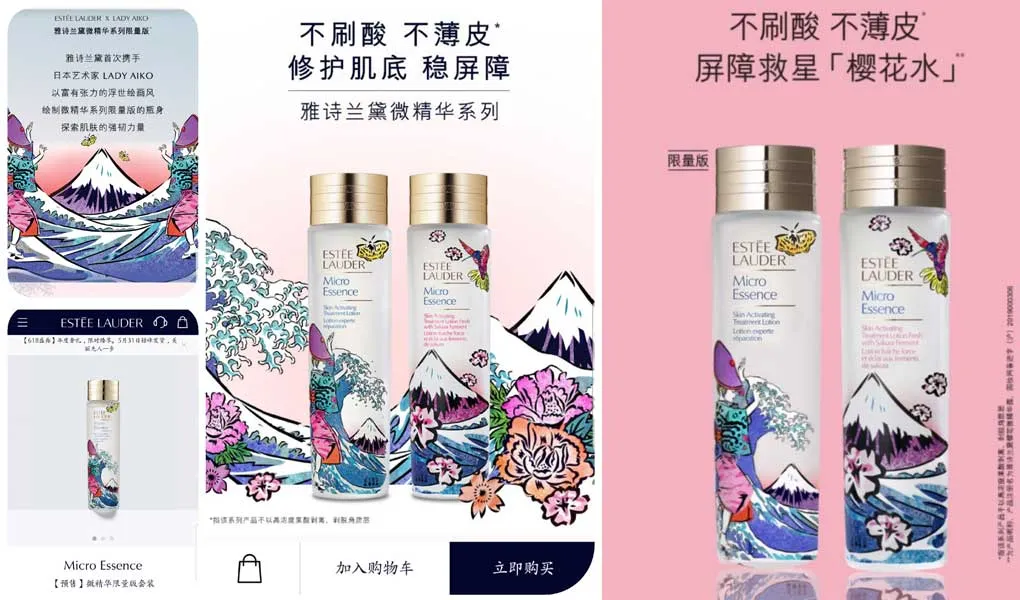
Estée Lauder is known for high-quality makeup and skincare. This luxury brand offers a wide range that caters to Chinese consumers looking for premium options with proven efficacy.
Estée Lauder invests heavily in digital marketing: KOL partnerships, celebrity endorsements, and strong performance during 618 and Double 11. Their Tmall Global store consistently ranks among the top luxury beauty performers during major shopping festivals.
In 2025 and into 2026, Estée Lauder has pushed harder into Douyin commerce, a strategic shift for a brand that previously focused on prestige department store positioning. It’s a necessary move. The prestige channel in China is moving online faster than in any other market I’ve worked in.
3. Lancôme
Lancôme is one of the most recognized French luxury beauty brands in China. Their Génifique serum and Absolue skincare range have a strong following among consumers aged 30 and above who prioritize anti-aging and skin quality.
In makeup, Lancôme’s L’Absolu Rouge lipstick performs particularly well during gifting seasons, especially around Chinese New Year and Valentine’s Day. The brand maintains its prestige positioning while extending reach through WeChat mini-programs and Douyin content targeting younger consumers entering the luxury category for the first time.
4. Dior Beauty
Dior Beauty holds a strong position at the top end of China’s cosmetics market. Rouge Dior lipstick is consistently one of the best-selling prestige lip products in the country. Chinese consumers respond strongly to Dior’s combination of French heritage and fashion credibility.
The brand invests in high-production Douyin content and collaborates with top-tier Chinese celebrities for major product launches. Their WeChat ecosystem, including private traffic groups and loyalty programs, helps retain high-value customers after the initial purchase.
5. MAC
MAC has a loyal following among professional makeup artists and enthusiasts in China’s major cities. The brand’s inclusive shade range and professional-grade formulas give it credibility in a market that increasingly values expertise over heritage.
MAC’s limited edition collections tied to Chinese cultural moments, including Lunar New Year sets, generate strong buzz on Xiaohongshu and Weibo. Their back-to-MAC recycling program resonates with younger, environmentally aware consumers who make up a growing share of the market.
6. Chanel Beauty
Chanel sits at the top of prestige in China. The brand does not compete on price or volume. It competes on exclusivity, and it wins that consistently.
Chinese consumers see Chanel cosmetics as a status signal. The Rouge Allure lipstick and Les Beiges collection generate disproportionate social media coverage relative to the brand’s paid marketing spend. Chanel’s relatively restrained digital approach, compared to L’Oréal or Estée Lauder, reinforces its luxury positioning rather than undermining it.
7. Shiseido
Shiseido occupies a useful position in China: Japanese heritage, Asian skin expertise, and a premium but not ultra-luxury price point. For consumers who want quality above mass-market without paying Dior prices, Shiseido is a natural choice.
The brand’s Synchro Skin foundation and Ultimune serum have strong word-of-mouth on Xiaohongshu. Shiseido has invested in ingredient communication, explaining the science behind their formulas in a way that appeals to 成分党 consumers. This is positioning that many European brands have not replicated effectively. It’s worth studying.
8. SK-II
SK-II’s Facial Treatment Essence, built around the Pitera ingredient, has one of the most recognizable brand stories in China’s premium beauty category. While SK-II is primarily skincare, their entry into makeup, including CC cream and foundation lines, leverages existing consumer trust to bring skincare loyalists into color cosmetics.
SK-II performs strongly with female consumers aged 25-45 who prioritize skin quality as the foundation of their makeup routine. Their content strategy on Xiaohongshu focuses on skin transformation stories, which drives strong organic search traffic within the platform.
9. Armani Beauty
Giorgio Armani Beauty, particularly the Luminous Silk foundation and Lip Maestro lipstick, has built a loyal following in China’s tier-1 cities. The brand positions itself as luxury with a modern, fashion-forward identity that appeals to professional women in their late 20s and 30s.
Armani Beauty has grown its Douyin presence through collaborations with lifestyle KOLs rather than celebrity endorsements. This creates more authentic content and, in my observation, better conversion rates than big-budget celebrity campaigns for this price tier.
10. YSL Beauty
Yves Saint Laurent Beauty is one of the strongest performers in China’s prestige color cosmetics category. The Rouge Pur Couture lipstick and Touche Éclat concealer are consistently top sellers. YSL has cultivated a bold, fashion-led image that resonates strongly with Chinese consumers aged 22-32.
Their Douyin campaigns use high-energy creative that fits the platform’s fast-paced content style. YSL is one of the luxury brands that has made Douyin commerce work at scale, not just for awareness but for direct sales conversion. That combination of brand heat and platform execution is rare at the prestige tier.
11. Charlotte Tilbury
Charlotte Tilbury entered China later than the brands above, but the growth has been fast. The Pillow Talk lipstick and Flawless Filter primer have strong organic traction on Xiaohongshu, where the brand’s aesthetic fits the “glazed skin” and “clean makeup” trends that define 2026 content on the platform.
Charlotte Tilbury’s virtual try-on technology, integrated into their Tmall experience, is one of the more polished implementations in the category. It increases time on page and reduces return rates, two metrics that matter for beauty brands selling online in China.
12. NARS
NARS built its reputation in China largely through one product: the Orgasm blush. Word of mouth on Xiaohongshu drove brand awareness before many other Western indie prestige brands had figured out how to enter the market effectively.
NARS has maintained its edgy, artistic positioning without over-adapting for the Chinese market, which is part of its appeal to consumers looking for something distinct from mainstream luxury. Their collaborations with contemporary artists generate strong content for social platforms without requiring celebrity-level media budgets.
13. Bobbi Brown
Bobbi Brown’s emphasis on natural, skin-enhancing makeup aligns well with the “no-makeup makeup” trend that has grown steadily in China since 2023. The brand’s foundation and concealer range, designed to enhance rather than mask skin, speaks to consumers who want to look like themselves, only better.
Bobbi Brown maintains a presence in department store channels alongside its online presence on Tmall and JD.com. In-store makeup services create hands-on brand experiences that build loyalty, particularly with first-time luxury buyers who want guidance before committing to a higher price point.
14. Perfect Diary (完美日记)
Perfect Diary is the domestic brand that showed the Chinese beauty industry what a digital-first strategy could achieve at scale. Founded in 2016, it became one of China’s most recognized cosmetics names within four years, built almost entirely on Xiaohongshu content, KOL marketing, and Tmall growth mechanics.
In 2026, Perfect Diary has matured past its initial explosive growth phase. The brand is investing in product quality upgrades and international expansion. Their Explorer eyeshadow palettes and lipsticks remain strong sellers. For international brands entering China, Perfect Diary’s rise is the clearest proof that Chinese consumers will switch to domestic brands when the price-quality ratio is right and the content strategy is excellent. You cannot ignore this.
15. Florasis (花西子)
Florasis is the most interesting domestic brand story in Chinese beauty today. They built their entire identity on traditional Chinese aesthetics, using ingredients drawn from Chinese herbal medicine and packaging that looks like museum pieces. Their collaboration with Chinese cultural heritage institutions gave them a content angle that no international brand can replicate.
Florasis went through a significant public controversy in 2023 but recovered by focusing on product quality and their cultural identity. In 2026, they remain one of the most-discussed domestic cosmetics brands on Xiaohongshu, with particular strength in cushion foundations and their carved lipstick lines.
Brands often ask about Florasis as a benchmark for domestic competition. My answer is consistent: you cannot compete with Florasis on Chinese cultural authenticity, but you can compete on ingredient credibility, international prestige, and formulation depth.
16. Judydoll (橘朵)
Judydoll is the go-to affordable color cosmetics brand for Gen Z consumers in China. Priced between 30 and 100 RMB for most products, the brand competes on product range breadth, trend speed, and packaging aesthetics. Judydoll launches new products faster than most brands can plan a single campaign.
Their Douyin presence is strong, built on a constant stream of short-form tutorial content showing how to use each product. Judydoll proves that you do not need a massive KOL budget if your content production speed is high and your products deliver genuine value at the price point.
17. Colorkey (珂拉琪)
Colorkey specializes in lip products and has built one of the most recognizable lines in China’s affordable color cosmetics segment. Their air cushion lip lacquer generated over a billion views of related content on Douyin at launch. That kind of organic reach happens when you combine a product format that genuinely stands out with a well-timed content strategy.
The brand targets consumers aged 18-28 with bold colors and trend-forward formulas. Colorkey’s growth shows how quickly a domestic brand can build scale in China when the platform strategy is right from the start.
18. INTO YOU
INTO YOU grew rapidly on the strength of its lip products, particularly their “dirty rose” tinted lipstick that became a Xiaohongshu phenomenon in 2024. The brand positioned itself in the gap between Judydoll’s mass market and Florasis’s cultural premium, offering trend-forward products at accessible prices with a more international aesthetic.
INTO YOU’s success follows a pattern I’ve seen many times: a single breakthrough product, strong Xiaohongshu seeding with mid-tier KOLs (KOCs), and fast product line extensions. Domestic brands execute this playbook better than most international entrants, and INTO YOU is one of the clearest recent examples.
19. Givenchy Beauty
Givenchy Beauty holds a steady position in China’s prestige color cosmetics market. Le Rouge lipstick is a perennial gifting favorite, particularly for Chinese New Year sets. The brand benefits from Givenchy’s strong fashion credibility and has maintained consistent positioning without the aggressive price promotions that can erode luxury brand equity over time.
20. Maogeping (毛戈平)
Maogeping is the premium domestic brand built on the reputation of China’s most recognized makeup artist, Mao Geping, who has styled Chinese celebrities for decades. In 2024, the brand listed on the Hong Kong Stock Exchange, marking a significant milestone for domestic cosmetics.
Maogeping’s positioning is distinct: it sits at the intersection of professional makeup artistry, Chinese aesthetic sensibility, and luxury pricing that competes directly with international prestige brands. I’ve seen Maogeping products on counters next to Dior and Chanel in high-end department stores, and they hold their own. This is a brand to watch as Chinese consumers continue to show willingness to pay premium prices for domestic quality.
What This Means If You’re Entering the China Market
Looking at this list, a few things are clear. International brands that succeed in China do not just export their global formula. They adapt, invest in local platforms, and build local content operations. Brands that treat China as a push market, sending the same campaigns that worked in Europe or the US, consistently underperform.
Domestic brands are no longer just an emerging threat. They are the competition you need to take seriously today. Florasis, Perfect Diary, Judydoll, Colorkey, and INTO YOU have shown Chinese consumers that great products can come from domestic brands at lower prices. That changes how an international brand needs to position itself entering the market in 2026.
The platform mix has also changed. A brand entering China today needs Tmall for transaction credibility, Douyin for volume and discovery, and Xiaohongshu for category authority. These three platforms work together, and a brand that is strong on only one of them will hit a ceiling quickly.