E-commerce How beauty e-commerce works
Best Chinese E-commerce Platforms for Beauty Brands
7 min read
On this page
- Top 5 Data Points on China’s Beauty E-commerce
- Platform-by-Platform: Key Trends
- Tmall (Alibaba)
- JD.com
- Xiaohongshu
- Douyin
- What the Data Tells Beauty Brands
- The C-beauty challenge is structural, not temporary
- Live commerce: what the numbers actually mean for your brand
- The platform division of labor
- Three questions to answer before 2027
- Summary: What Each Platform Delivers for Beauty Brands
I get asked the same question by beauty brand founders every month: which Chinese platform should we focus on? The honest answer in 2026 is that the question itself is wrong. You need a platform stack, not a single channel. China’s online beauty market hit RMB 1.1 trillion in 2025. Online channels now account for 65.4% of all cosmetics transactions. The window for international brands is still open, but competition is intense. Here is what the data says.
Top 5 Data Points on China’s Beauty E-commerce
- Tmall controls 44 to 50% of China’s major online beauty GMV, with over 500 million monthly active users. It ranks as the world’s third most-visited site and remains the home base every international beauty brand must establish.
- JD.com reported a 13% YoY revenue increase in Q4 2024 and net profit of ¥9.85 billion. Its logistics strength and anti-counterfeiting reputation make it the preferred channel for premium skincare buyers who purchase regularly.
- Douyin beauty GMV reached nearly ¥20 billion in a single month (July 2025), up 31.7% year-on-year. Total platform GMV across all categories stands at approximately ¥3.5 trillion (US $483 billion). (Source: Ocean Engine / Statista)
- Xiaohongshu processes 600 million daily searches, roughly half of Baidu’s volume. Its AI-powered tool “Diandian” now reads emotional intent behind queries, changing how brands need to approach product content and seeding.
- C-beauty brands now hold 57.4% of China’s cosmetics market, their fifth consecutive year of market share gains. Proya, Winona, and Florasis are taking direct share from international players in functional skincare.
Platform-by-Platform: Key Trends
Tmall (Alibaba)
- Content-commerce integration: The Alibaba-Xiaohongshu partnership gives Xiaohongshu users direct shopping links into Taobao/Tmall stores. Discovery on one platform converts to purchase on another.
- Brand investment resources: Tmall continues to expand support for brand growth in 2025-2026, shifting from pure volume toward long-term brand equity.
- Extended 618 campaign: The mid-2025 “618” shopping festival ran 39 days, earlier than ever. Brands with strong positioning benefit from the extended window, but smaller sellers face growing margin pressure.
JD.com
- Profit rebounded sharply: Q4 revenue up 13% YoY. Net profit nearly tripled. This reflects real recovery in premium consumer spending.
- “New Product Growth” initiative: JD launched this program in April 2025 to support tens of thousands of new SKUs, giving brands a faster path to scale product launches.
- Instant retail expansion: JD and Alibaba each invested ¥10 billion into 30 to 60 minute delivery. Beauty brands can now offer same-day delivery in major Chinese cities through JD logistics.
Xiaohongshu
- Where opinions form: In-app shopping guides and native commerce features make Xiaohongshu the platform where Chinese consumers build product opinions before buying anywhere else. A Xiaohongshu marketing strategy is now essential for beauty brands.
- AI-powered discovery: “Diandian” launched in beta, reading emotional intent behind search queries. A search for “skincare that feels like self-care” returns different results than “anti-aging serum.”
- Cross-platform checkout: Links connect directly from Xiaohongshu to JD.com and Tmall. High-intent consumers discover on Xiaohongshu and complete their purchase in seconds on their preferred platform.
Douyin
- Brand-led livestreams dominate: 70% of beauty livestream content now comes from brands and merchant stores, not influencers. Douyin advertising has matured into a brand-operated channel that requires its own production capacity.
- Social commerce drives real volume: Social commerce represents roughly 17.1% of China’s total online retail. L’Oreal generated CNY 1.2 billion in a single Douyin beauty campaign in September 2025.
- Algorithm rewards consistency: Douyin surfaces products based on behavioral signals and viewed content. Brands that stream daily consistently outperform brands that run monthly campaigns.
What the Data Tells Beauty Brands
The market has shifted more in the past 18 months than in the five years before that. Here is what every beauty brand decision-maker needs to understand before setting their 2026 China strategy.
The C-beauty challenge is structural, not temporary
Chinese brands now hold 57.4% of the domestic cosmetics market. That figure was below 40% just three years ago. Proya topped Tmall 618 skincare rankings in 2026. Florasis commands premium pricing in Chinese cosmetics. Winona owns the sensitive skin category.
These brands do not win on price alone. They invest in clinical ingredient claims, national identity positioning, and high-frequency content production on Douyin and Xiaohongshu. They outproduce most international brands on local content.
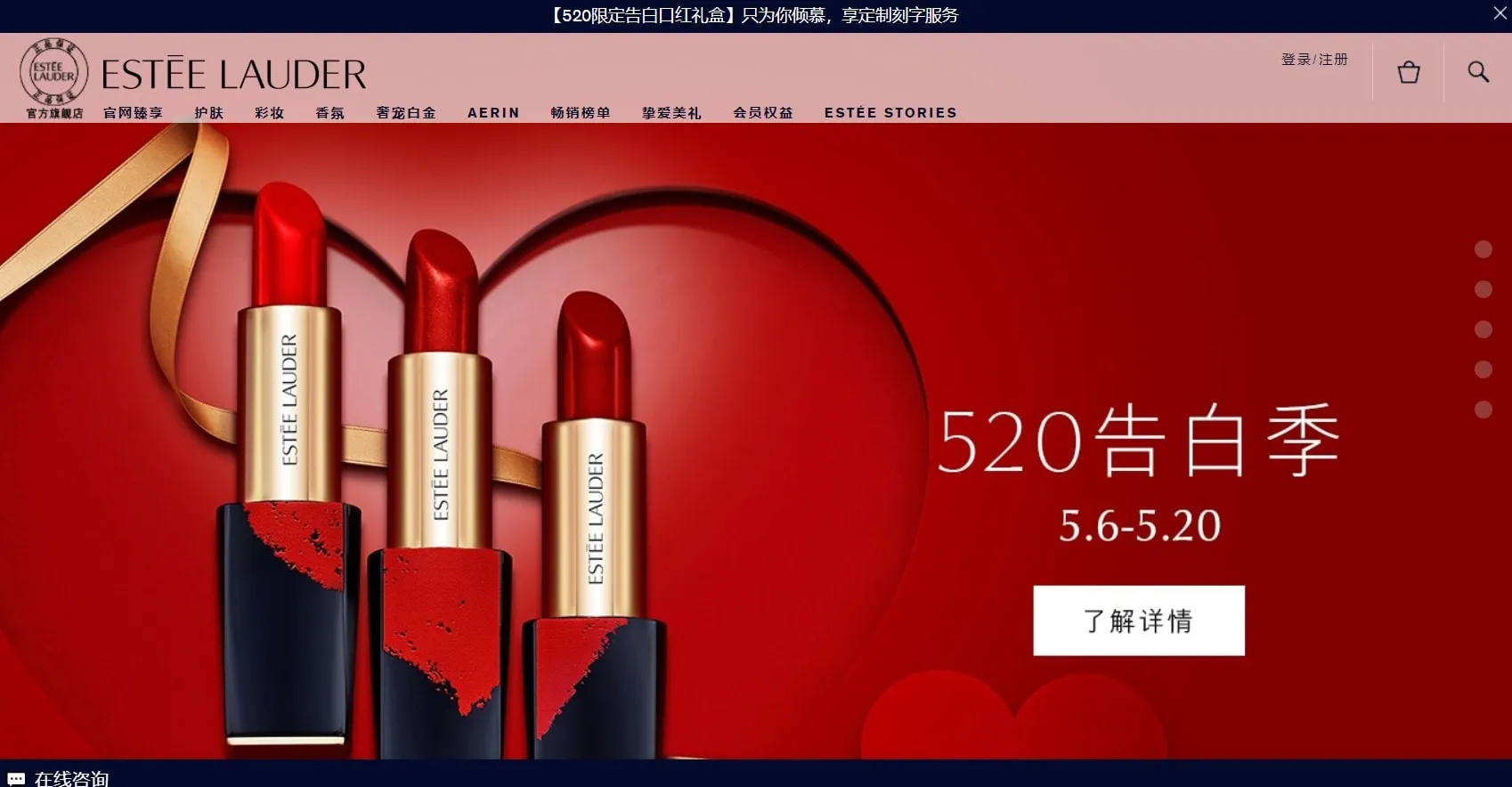
International brands are not losing because their products are worse. They are losing ground because they adapt more slowly. The reason is almost always the same: they treated Tmall as the full strategy, not the foundation. Shiseido, L’Oreal, and Estee Lauder continue to perform because they run full-platform operations with local creative teams and daily production schedules.
Live commerce: what the numbers actually mean for your brand
Douyin beauty GMV hit nearly ¥20 billion in July 2025 alone, up 31.7% year-on-year. L’Oreal drove CNY 1.2 billion from one Douyin campaign. These numbers get attention. They also create false expectations.
The brands generating those results are not running occasional live events. They operate multiple live sessions per week from brand accounts. 70% of Douyin beauty livestream content now comes from merchant stores and brand channels. The era of paying one mega-influencer to carry your quarterly sales target is over.
I have seen brands run three live sessions, see low conversion, and quit. That is the wrong conclusion. The brands that win on Douyin run five to seven sessions per week and optimize each one. Perfect Diary built its business this way. Florasis refined the model. International brands need the same operational capacity.
Pair your Douyin operation with mid-tier KOL partnerships on Xiaohongshu. Content volume from KOL seeding feeds both platform algorithms and AI discovery tools at the same time.
The platform division of labor
No single platform covers the full consumer journey.
- Xiaohongshu: opinion formation. High-income users research ingredients, read peer reviews, and decide which brands to trust before they buy anywhere. This is your primary seeding ground. Xiaohongshu users are less price-sensitive than audiences on other platforms.
- Douyin: awareness to purchase. Short video and live commerce turn discovery into impulse buying. Your Douyin strategy needs its own daily content production pipeline.
- Tmall: credibility confirmation. Consumers who discover you on Douyin or Xiaohongshu check your flagship store before completing a purchase. Your Tmall presence is a trust signal as much as a sales channel.
- JD.com: premium repeat purchase. JD’s logistics and anti-counterfeiting reputation attract premium skincare buyers who return regularly. It is the retention channel.
Three questions to answer before 2027
If not, your content strategy needs adjustment.
Second: do you have daily production capacity for Douyin live commerce? A monthly campaign budget does not replace a weekly operating rhythm.
Third: is your Xiaohongshu seeding strategy built around emotional insights or product features? In 2026, features alone do not close the sale on Xiaohongshu.
I have seen brands fail on all three. The fix is always the same: invest in local content production, build a clear platform division of labor, and treat China as an operational commitment, not a one-off campaign.
Summary: What Each Platform Delivers for Beauty Brands
- Tmall remains the essential brand home base. Use it as your credibility anchor and activate it fully during 618 and Double 11.
- JD.com offers logistics excellence and a premium buyer base. Use its new product programs to test SKUs faster and retain high-value customers.
- Xiaohongshu is where Chinese consumers form opinions and where AI results get fed. Your content here drives discovery across every other channel.
- Douyin is where volume happens. Build a daily live commerce operation and support it with consistent KOL seeding for sustained reach.