Distribution and retail Beauty retail chains and store formats
China Tier 3-4 Beauty Retail: Counters, CS Stores, Real Costs
15 min read
On this page
- Key numbers for China’s lower-tier beauty retail
- The questions export directors ask me about this
- Do I need my own counter, or can a multi-brand store do the job?
- At what revenue does a provincial counter stop losing money?
- Is the department store channel still worth a counter?
- I have no Chinese entity and no field sales team. Can I still do this?
- What changed in China’s offline beauty market
- Premium beauty is recovering, and the recovery is offline-friendly
- The counter map is being redrawn, not expanded
- Chain drugstores are contracting while the category grows
- Digital acquisition got more expensive, which is the real driver
- Which brands are winning in lower-tier Chinese cities
- La Mer: follow the new luxury mall, not the old department store
- 3CE: thirty stores, almost none in tier 1
- Who actually buys premium beauty in China’s tier 3 and tier 4 cities
- The county consumer is not poor, she is under-served
- The price bands that sell
- Physical is the closing step, not the discovery step
- What this changes for your brand
- What a provincial counter costs, and when it pays
- The four realistic routes into lower-tier Chinese cities
- What to do, in order
- Sources
- The open question
In the twelve months to June 2024, premium beauty brands opened 33 new department store counters across 23 Chinese cities ranked tier 3 to tier 5, and roughly 90% of those were the brand’s first physical point of sale in that city (NielsenIQ data, reported by The Paper, 2024). Over the same period the national count of premium beauty counters across 51 cities had shrunk by about 6,000 since 2019. Premium beauty in China is not opening more doors. It is opening different doors, in cities most foreign brand owners cannot place on a map.
The number that made me write this is smaller. 538 premium beauty counters sat in tier-3-and-below cities in 2023, up 9.1% year on year while the national total fell (NielsenIQ, 2024). A category that spent a decade declaring physical retail dead is now the category funding new counters in Baoji, Enshi and Xiantao. This article covers what the offline shift looks like in 2026, what the tier 3 and tier 4 consumer actually spends, which channels exist beyond the counter, and the part nobody writes down: what a counter in a provincial city costs, and the revenue at which it stops losing money. For many brands reading this the honest answer is that you are not ready, and I will tell you what the step before looks like.
Key numbers for China’s lower-tier beauty retail
- RMB 116.05 billion (1,160.5亿元): total China beauty and skincare sales in Q1 2026 (FBeauty 未来迹, June 2026).
- 538 premium beauty counters in tier-3-and-below cities in 2023, up 9.1% year on year, against a national loss of about 6,000 counters since 2019 (NielsenIQ, 2024).
- Around 46% of China’s cosmetics retail value still went through offline outlets in 2025, with online at 54.05% (Mordor Intelligence, China Cosmetic Products Market report, 2026).
- 3,465 Watsons stores in mainland China at the end of 2025, down from 3,744 a year earlier, with average revenue per store at HKD 3.83 million against HKD 6.23 million in 2019, a fall of 39% (Watsons China full-year 2025 results, March 2026).
- 1,866 county-level administrative units hold 52.5% of China’s population and 38.1% of its GDP (county economy data cited by CBNData, 2024).
- 75.2% of colour cosmetics sales in Q1 2026 fell in the RMB 0 to 300 band; in skincare that band took 58.6%, while above RMB 1,000 took 16.5% (FBeauty 未来迹, June 2026).
The questions export directors ask me about this
Do I need my own counter, or can a multi-brand store do the job?
A counter gives you control and a fixed monthly burn. A multi-brand store in the CS channel gives you reach and costs you margin plus price discipline. The routes table compares the four realistic options.
At what revenue does a provincial counter stop losing money?
The economics section shows the line items.
Is the department store channel still worth a counter?
The old format is shrinking. The renovated, experience-led format is not, and that is where premium counters are being added. Our separate analysis of Intime Department Store’s New Retail and omnichannel model covers what the newer format asks of a brand.
I have no Chinese entity and no field sales team. Can I still do this?
Not directly, and not well through an agent who carries eleven other brands. There is an order of operations, and offline is step four.
What changed in China’s offline beauty market
Premium beauty is recovering, and the recovery is offline-friendly
Estée Lauder reported 13% organic net sales growth in mainland China in the second quarter of its 2026 financial year, and Procter & Gamble reported SK-II above 15% in Greater China over the same quarter (company results cited by Xinhua, June 2026). L’Oréal returned to mid-to-high single digit growth in China in Q1 2026. In May 2026, premium brands held 55% of the top 20 beauty ranking on Douyin (Xinhua, June 2026). That last figure matters offline: premium beauty sells on skin contact, shade matching and a trained advisor, and all three are physical.
The counter map is being redrawn, not expanded
A net loss of roughly 6,000 premium counters across 51 cities since 2019, and at the same time 538 counters in tier-3-and-below cities in 2023, up 9.1% (NielsenIQ, 2024). Brands are closing tier-1 and tier-2 doors that no longer pay and opening cheaper doors where they are the only premium option on the floor. Lancôme reached 130 Chinese cities in 2024, entering Lishui, Zhuji and Shangyu. Guerlain ran 142 department store counters nationally. L’Occitane set out to add 10 to 15 stores in tier 3 and tier 4 cities. La Mer moved into Changchun and Lanzhou, Estée Lauder into Enshi, Quanzhou and Changzhou (reporting cited by The Paper and CBNData, 2024).
Chain drugstores are contracting while the category grows
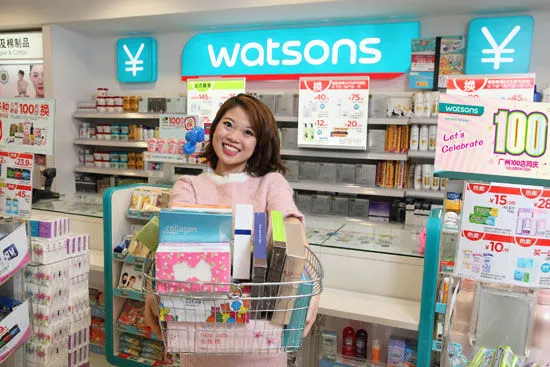
Watsons China ended 2025 with 3,465 stores after 279 net closures, down from 3,744, and closed 714 mainland stores net between 2021 and 2025. Average revenue per store was HKD 3.83 million in 2025 against HKD 6.23 million in 2019, a fall of 39% (Watsons China full-year 2025 results, March 2026). Offline beauty is not recovering as a block. High-touch premium retail in under-served cities is. Mass-market chain retail with 3,000 similar doors is not. If a chain offers you national distribution, do the maths per door, not per network. The newer specialty formats did not fill the gap either: in July 2022 Qianzhan projected offline beauty specialty retail compounding at 36.5% a year to RMB 102.3 billion by 2027, and THE COLORIST was down to 198 stores by March 2023 from a peak of 248.
Digital acquisition got more expensive, which is the real driver
Customer acquisition costs are rising across China’s domestic e-commerce channels while product lifecycles stretch, and platform price pressure intensified over the past year (Daxue Consulting, 2026 China Beauty Market Trends Report; Mordor Intelligence, 2026). Nothing in the offline revival is nostalgia. When a Douyin or Tmall customer costs more to buy than she returns on the first order, a counter with a fixed cost and a repeat rate starts to look cheap. The frame shifted from traffic wars to value competition (Xinhua, June 2026), which is a polite way of saying the traffic got too expensive to fight over.
| Indicator | Figure | Period | Source |
|---|---|---|---|
| China beauty and skincare sales | RMB 116.05 billion | Q1 2026 | FBeauty 未来迹, June 2026 |
| Offline share of cosmetics retail value | about 46% (online 54.05%) | 2025 | Mordor Intelligence, 2026 |
| Premium counters, tier 3 and below | 538, up 9.1% year on year | 2023 | NielsenIQ, 2024 |
| Net change in premium counters, 51 cities | about -6,000 | 2019 to 2023 | NielsenIQ, 2024 |
| New premium counters, tier 3 to 5 cities | 33 across 23 cities, about 90% first entries | 12 months to June 2024 | NielsenIQ via The Paper, 2024 |
| Watsons mainland China stores | 3,465, from 3,744 | End 2025 | Watsons China FY2025 results, March 2026 |
| Watsons revenue per store | HKD 3.83 million, down 39% vs 2019 | 2025 | Watsons China FY2025 results, March 2026 |
| Retail sales of consumer goods growth | 3.7% | 2025 | National Bureau of Statistics of China |
Which brands are winning in lower-tier Chinese cities
La Mer: follow the new luxury mall, not the old department store
La Mer added counters in Changchun and Lanzhou, both provincial capitals outside the tier-1 and new tier-1 group (reporting cited by The Paper, 2024). The mechanism is worth copying. A developer opening a luxury mall in a provincial capital needs anchor tenants with strict location standards to validate the floor, so it offers terms it would never offer in Shanghai. La Mer takes the space at a rent a tier-1 brand would call free and becomes the only high-end skincare counter within a three-hour drive. What a smaller brand cannot copy is La Mer’s ability to keep that door open when the numbers disappoint.
3CE: thirty stores, almost none in tier 1
3CE operated around 30 stores nationally in 2024, with only one each in Beijing, Shanghai and Guangzhou and the rest in provincial capitals and tier-3 cities including Handan and Wuhu (CBNData, 2024). 3CE is not a heritage house. It is a colour brand with a strong social following that decided tier-1 flagships were a marketing expense it did not need, and put its doors where rent is a fraction of Shanghai and its Xiaohongshu audience had no physical alternative. A mid-sized foreign brand can genuinely replicate this.
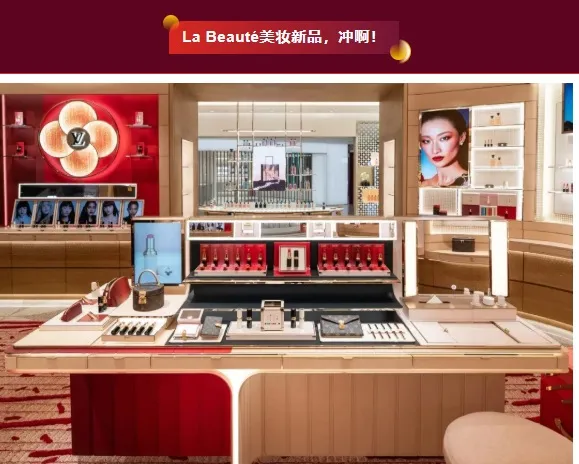
Premium beauty is reopening physical doors in China, increasingly outside tier-1 cities.
Who actually buys premium beauty in China’s tier 3 and tier 4 cities
The county consumer is not poor, she is under-served
China’s 1,866 county-level units hold 52.5% of the population and 38.1% of GDP, and county-level GDP rose from RMB 33.1 trillion in 2016 to RMB 46.7 trillion in 2022, a compound annual rate of 5.9% (CBNData, 2024). Baoji, a tier-3 city in Shaanxi, recorded urban disposable income of RMB 42,448 per head in 2023, up 6.8%. Lower than Shanghai, and with a mortgage a third of the size, so discretionary beauty spend in a tier-3 household can exceed a tier-1 household on a higher headline income. Chinese media call this consumer 县城贵妇, the county lady, half joke and half accurate segment definition.
The price bands that sell
In Q1 2026 the RMB 0 to 300 band took 75.2% of colour cosmetics sales and 58.6% of skincare sales, while skincare above RMB 1,000 held 16.5% (FBeauty 未来迹, June 2026). If your hero SKU retails above RMB 600 and you have nothing below RMB 300, a provincial counter will be slow, because the first purchase from an unknown brand is rarely the expensive one. And the above-RMB-1,000 skincare segment is holding, which is exactly why La Mer can justify these locations and a mid-price brand cannot on the same grounds.
Physical is the closing step, not the discovery step
The pattern we see: discovery on Xiaohongshu or Douyin, comparison against reviews, a visit to a counter for shade, texture or scent, then repeat purchase in a WeChat group run by the counter’s own beauty advisor. That last link is the one foreign brands keep failing to build, and in a tier-3 city the advisor’s personal WeChat group is the most valuable asset attached to the counter. It does not transfer when you change distributors. Lower-tier consumers also respond more to price-to-performance and local cultural cues than to brand premium and ingredient technology (Chinese market analysis, September 2026). Your Paris story lands less well. Your gift box and your 女神节 mechanic land more.
| Segment | What she buys | Where she discovers | Where she closes | What breaks the sale |
|---|---|---|---|---|
| Tier-1 premium buyer | Ingredient-led skincare above RMB 600 | Xiaohongshu, brand WeChat | Tmall, travel retail, flagship counter | Weak clinical claim |
| Tier 3-4 county buyer, 28 to 45 | Entry hero below RMB 300, gift sets | Douyin, Xiaohongshu, friends | Local counter or CS store, then WeChat repeat | No local physical presence, no advisor |
| Tier 3-4 younger buyer, 18 to 27 | Colour cosmetics below RMB 150 | Douyin, livestream | Multi-brand beauty store, instant retail | Price above the local reference point |
What this changes for your brand
If you sell premium skincare or fragrance, the opportunity is real and time-limited. Right now you can be the only brand of your kind on a department store floor in a city of four million, at a rent that would buy a storeroom in Shanghai. In three years that floor will be full.
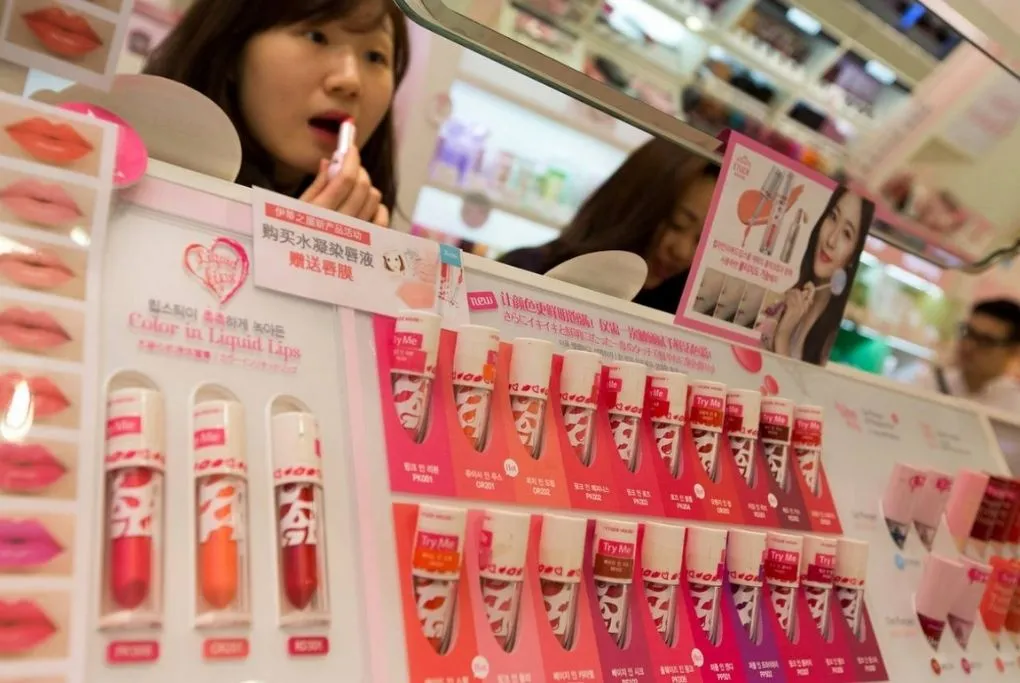
If you sell mid-price colour cosmetics, the offline route is multi-brand stores and local chains, not counters, and it costs 45% to 60% of retail in channel margin. Price for that from the start instead of discovering it after you have set your Tmall price.
And if your China business is one cross-border Tmall Global store with flat sales, going offline in the provinces will not fix it. It converts a marketing problem into a fixed-cost problem. I say this to somebody most months.
What a provincial counter costs, and when it pays
Treat it as a planning range, not as research data. Figures are RMB per month for one counter in a tier-3 city department store, 2026.
| Line item | Monthly range (RMB) | Note |
|---|---|---|
| Fit-out, amortised over 24 months | 6,000 to 17,000 | Total build RMB 150,000 to 400,000 depending on brand standards |
| Two beauty advisors, fully loaded | 12,000 to 18,000 | Social insurance and sales incentive included |
| Store commission on gross sales | 25% to 35% of sell-out | Deducted by the department store, negotiable on entry |
| Stock on the floor, financing cost | 1,500 to 4,000 | Consignment shifts this, rarely offered to new brands |
| Local activation, samples, training | 8,000 to 20,000 | Not optional in a city with zero awareness |
| Regional supervision and reporting | 4,000 to 8,000 | Shared across a cluster of counters |
A counter is therefore not a test. It is a commitment of roughly RMB 1.4 to 2 million a year in sell-out per door. And the largest variable is not rent or payroll. It is local activation, because a counter in a city that has never heard of you does not sell, and no amount of fit-out quality changes that.
The four realistic routes into lower-tier Chinese cities
| Route | Your fixed cost | Margin given up | Control of price and image | Sensible when |
|---|---|---|---|---|
| Your own department store counter | High, RMB 110,000 to 160,000 monthly break-even per door | 25% to 35% store commission | Full | Premium positioning, proven local demand, Chinese entity in place |
| CS channel, multi-brand beauty stores and local chains | Near zero | 45% to 60% to distributor and store | Weak, expect discounting | Mid-price products, reach matters more than control |
| National chain listing, Watsons type | Listing fees and trade spend, no lease | 40% to 55% plus trade terms | Low | Mass-market volume, and only after per-door productivity maths |
| Instant retail and O2O from a partner’s local stock | Low | Platform commission plus partner margin | Moderate | Replenishing an already-known hero SKU |
My position, and it is not a comfortable one to sell: for most foreign beauty brands with no Chinese entity and no field team, route two is the only one that makes sense in 2026, and only in three to five cities at a time.
What to do, in order
One, find your cities in your own data. Your Xiaohongshu saves, Douyin views and Tmall Global shipping addresses already show which provincial cities have demand. Rank the top fifteen by orders per hundred thousand population, not by absolute orders, or you will pick Shanghai again. This is free and almost nobody does it.
Two, build the social layer that makes a physical door possible. In a tier-3 city the counter converts demand, it does not create it. Seed KOCs who actually live in those cities, on local landmarks, in the local register. Twenty genuine local KOCs per city beat one national KOL.
Three, give offline repeat somewhere to land. The counter sells the first jar. The second comes from Tmall, a Douyin store or a WeChat group. If your Tmall store in China is not set up to capture it, your counter subsidises a competitor’s retargeting. Cross-border is fine for phase one, but a consumer standing in a shop will not wait twelve days for a cross-border parcel.
Four, place product through a CS partner and measure sell-out weekly. Sell-out, per store, per SKU. Not sell-in. If your distributor will not give you that, you have the wrong distributor. Six months of honest data tells you whether a counter is a decision or a hope.
Five, open one counter, not ten. Take the city with the best sell-out per capita, run one door for a year, and learn what your break-even really is rather than what our model says. Brands that opened ten at once are the brands that closed ten at once.
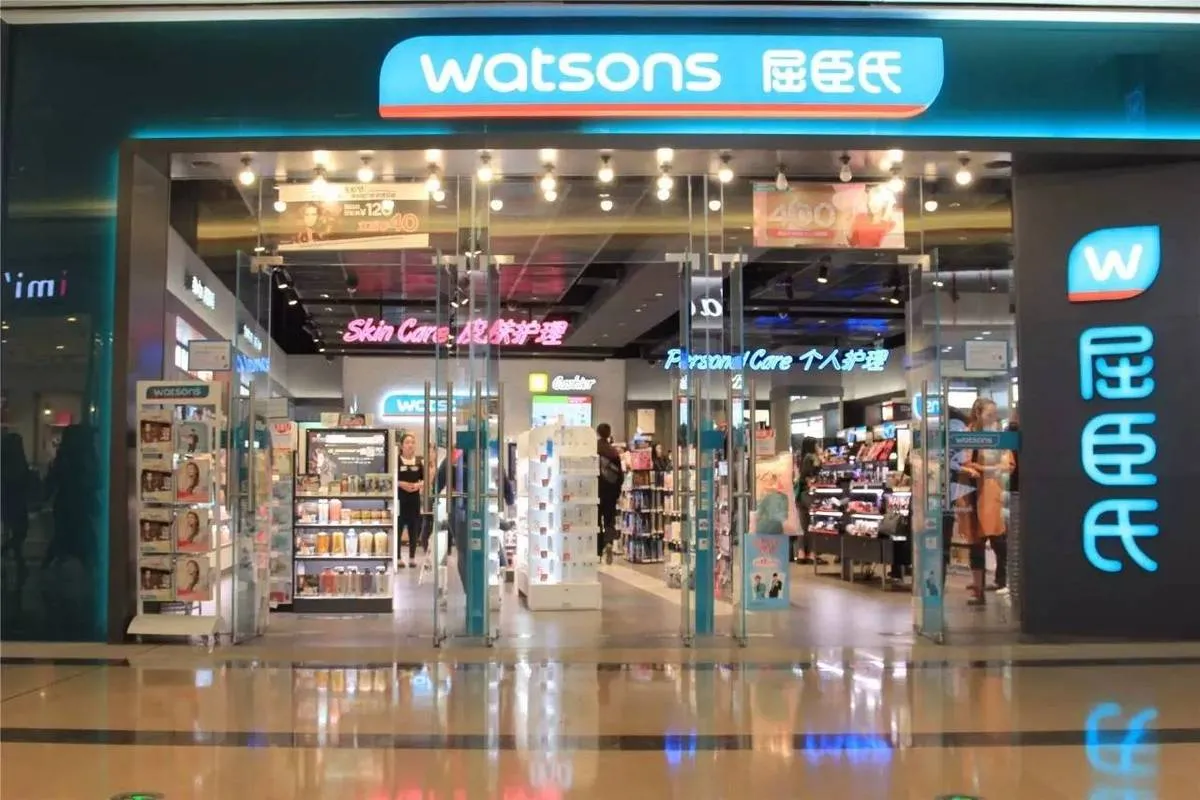
The multi-brand store is the realistic first physical step for a foreign brand: no lease, no payroll.
Sources
- NielsenIQ premium beauty counter data, reported in 深度 | 下沉“黄金期”,高端美妆如何挖掘县城增量?, The Paper (澎湃新闻), 2024. Primary source for the 538 counters in tier-3-and-below cities, the 9.1% growth and the 33 new counters across 23 cities. Read it here.
- FBeauty 未来迹, 1160亿元之后,美妆护肤市场走向两种分化, published on The Paper, 30 June 2026. Source for the Q1 2026 market value of RMB 116.05 billion and the price-band splits. Read it here.
- Xinhua (新华网), 新消费观察丨高端美妆市场回暖 行业竞争逻辑重写, 11 June 2026. Source for premium brand growth and the 55% premium share of the Douyin beauty top 20 in May 2026. Read it here.
- Daxue Consulting, 2026 China Beauty Market Trends Report. Source for rising acquisition costs, the Douyin versus Tmall shift, and the lower-tier physical expansion trend including Chanel and La Mer. Read it here.
- CBNData, county economy and lower-tier premium beauty coverage, 2024 and 2026, for county GDP and population share, brand counter counts and the Watsons lower-tier strategy.
The open question
The counters going into tier-3 cities today are mostly opened by houses that can absorb a loss-making door for three years while a city grows into it. If you cannot, does the lower-tier opportunity exist for you at all, or is it a story about oligopoly written as a story about growth? I do not know where the line sits for a brand doing RMB 20 million a year in China.