Brand analyses Luxury houses, celebrity and indie brands
Rihanna’s Fenty Beauty in China: Analysis of the launch
5 min read
On this page
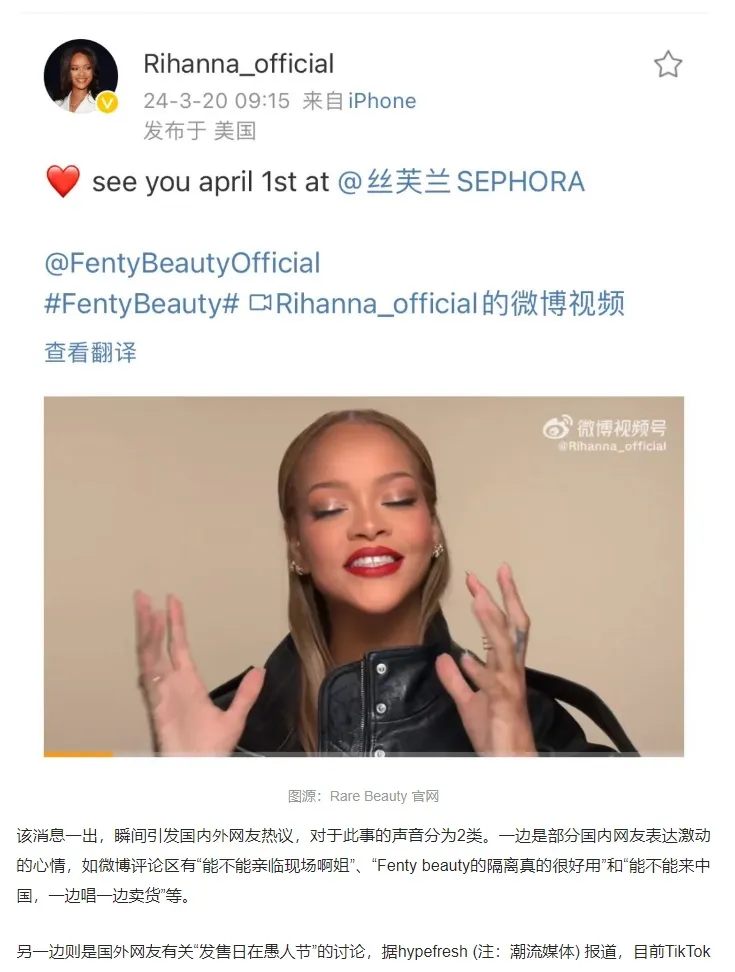
Rihanna launched Fenty Beauty in mainland China in April 2024, via Sephora China. The announcement dropped on Weibo. Fenty’s approach was clean: a clear identity, a strong retail partner, and the right digital channels from day one.
The brand’s “Beauty for All” positioning is not just a slogan. Fifty shades of foundation in a market where most launches offer ten. That contrast works in China. Consumers on Xiaohongshu talked about it before the product even hit shelves.
The launch built on Fenty’s presence in Hong Kong and Macau since 2019. Mainland China was the logical next step, and the Sephora partnership made it happen without years of domestic registration. The brand kept its cruelty-free commitments intact by routing sales through Tmall Global, the cross-border channel that bypasses domestic animal testing requirements. This is the kind of structural decision that saves brands two or three years of delay. Fenty got it right.
This expansion brought something new to China’s beauty market: a wide product range built around diversity, sold to a broad demographic. The Chinese consumer in 2024 was ready for it. By 2026, the question is how Fenty has adapted to a market that moves fast.
Fenty Beauty’s presence on Tmall
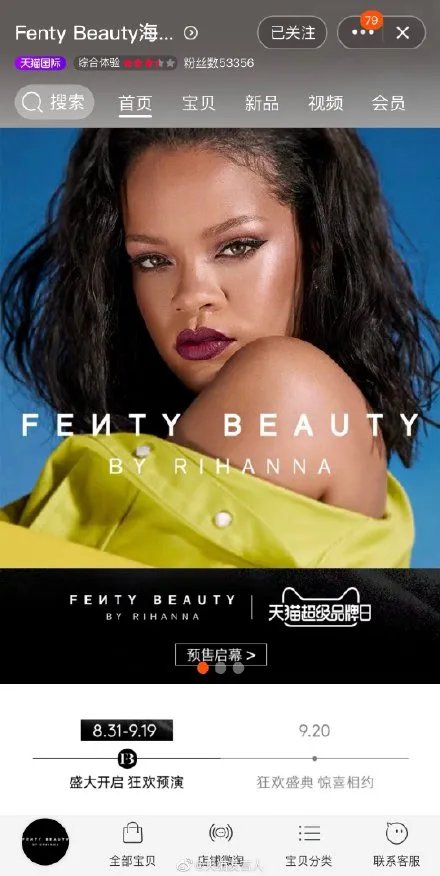
- Launch in 2019: Fenty Beauty launched its Tmall Global import store in 2019, marking a significant step in its Asian market expansion strategy.
- Rapid follower growth: Upon its debut on Tmall Global, Fenty Beauty gained over 50,000 followers within half a day. That kind of momentum signals real consumer anticipation, not just curiosity.
- Direct access to products: Tmall Global lets Chinese consumers purchase international products directly from overseas, with no need for physical store visits. Convenient, trusted, and increasingly expected.
- Integration with Chinese social media: Alongside its Tmall store, Fenty built presence on Xiaohongshu (RED), creating a feedback loop between content discovery and product purchase.
- Continued e-commerce growth: Fenty has continued to expand on Chinese e-commerce platforms, reaching consumers who want premium, inclusive beauty products delivered to their door.
By 2026, Tmall Global remains the fastest route to market for international beauty brands. But visibility is not free. You need paid traffic, live commerce slots, and a promotional calendar built around 618 and Double 11. Organic ranking alone will not carry you. See our full breakdown of how to sell cosmetics in China for the complete picture.
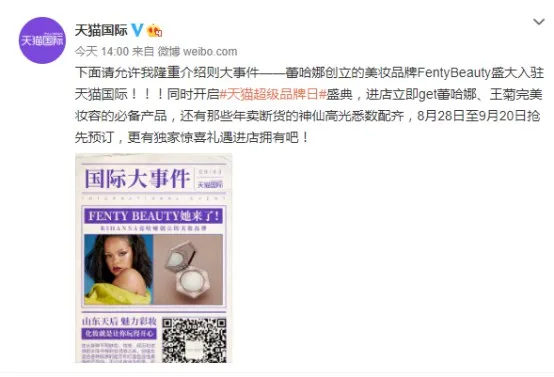
Social media marketing of Fenty in China
Fenty Beauty built presence across Chinese social media platforms including Weibo, Xiaohongshu (Redbook), and Douyin. This combination is correct. Each platform covers a different moment in the purchase journey.
Weibo was the right place to announce the China launch. Rihanna posted directly, which created immediate press coverage. Xiaohongshu (XHS) is where Chinese consumers research products before buying. Foundation shades, skin undertone comparisons, texture reviews from real users. That content drove early trial. Douyin is where the brand reaches a younger, mobile-first audience through short video and live sales.
I’ve seen brands skip one of these three and pay for it. If you’re only on Weibo, you’re visible but not trusted. If you’re only on XHS, you’re getting word of mouth but missing the transaction. Douyin live commerce can drive volume in 48 hours if the campaign is set up properly. Fenty used all three.
What’s changed: five trends shaping cosmetics in China
Two years after Fenty’s mainland launch, the Chinese beauty market looks different. Here is what I see on the ground:
- AI-powered product discovery: Chinese consumers increasingly use AI tools integrated into Taobao, Douyin, and XHS to find products that match their skin type or tone. Brands that have structured their product data correctly get surfaced more often. Fenty’s shade-range story is well-suited to this kind of filtered search.
- Ingredient-led purchasing: The Chinese consumer in 2026 reads labels. Niacinamide, peptides, barrier-repair actives. Brands that explain their formulas in clear Chinese-language content on XHS convert better than brands that lead with celebrity alone.
- Douyin live commerce volume: Douyin overtook Taobao Live in gross merchandise value in 2025. Brands without a Douyin live strategy are leaving money on the table. The top beauty brands on Douyin run live sessions three to five days per week.
- XHS as the new search engine: Chinese Gen Z uses Xiaohongshu to search before they use Baidu. If your brand does not have 100 or more genuine user reviews on XHS, you effectively don’t exist for that audience. This is where UGC campaigns matter most.
- Domestic competition intensifying: Chinese brands like Florasis, Colorkey, and Judydoll have raised the product quality bar. International brands can no longer win on origin alone. They need a real positioning and a real content strategy.
KOL strategy for international cosmetics brands
Fenty used local celebrities and influencers to align its launch with Chinese consumer expectations. That is the right instinct. But KOL selection in China is more precise than it looks from the outside.
Follower count is not the metric. Engagement rate, audience quality, and content-format fit matter more. A mid-tier beauty creator on Douyin with 300,000 followers can outperform a mega-celebrity if the product match is right. I’ve seen this happen in every category from skincare to color cosmetics.
The other thing brands miss: KOL campaigns are not one-shot events. The brands that sustain results in China run ongoing creator relationships, not a single launch moment. Monthly content, product seeding, and creator community-building over 12 months produce compounding results.
What Fenty’s launch teaches brands entering China today
The Fenty entry into China in 2024 worked because several things aligned: a strong retail partner in Sephora, a clear product differentiator in shade range, a celebrity founder with genuine Chinese social media presence, and a cross-border e-commerce route that bypassed the most complex regulatory steps.
Not every brand has all four. But the lesson is: be honest about which ones you have and build your strategy around them. If you don’t have a celebrity, you need a stronger KOL strategy. If you don’t have Sephora, you need a different retail entry point. If your product story is not obvious in three seconds, you need better content.