KOLs and Douyin Beauty KOL profiles
Li Jiaqi: Why the Lipstick King Still Rules Chinese Beauty Marketing
6 min read
On this page
Li Jiaqi is not a trend. He is a permanent fixture of China’s beauty market. Since 2017, this former makeup store assistant has built the most powerful individual media channel in Chinese cosmetics, moving billions of RMB in product sales through live streaming. In 2026, his influence has not faded. It has matured. Foreign beauty brands entering China still ask the same question: do we need Li Jiaqi? The real question is: do you understand why he works, and what that tells you about the Chinese consumer?
From Makeup Store Assistant to China’s Most Powerful Beauty Voice
Li Jiaqi started live streaming on Taobao in 2017 while working as a makeup assistant at L’Oreal. His breakthrough came in late 2019 when he set a record by testing 380 lipsticks directly on his lips in a single 2-hour session. That stunt was not a gimmick. It showed his audience something they could not get anywhere else: an honest, real-time reaction to color, texture, and finish, on an actual person, not a product photo.
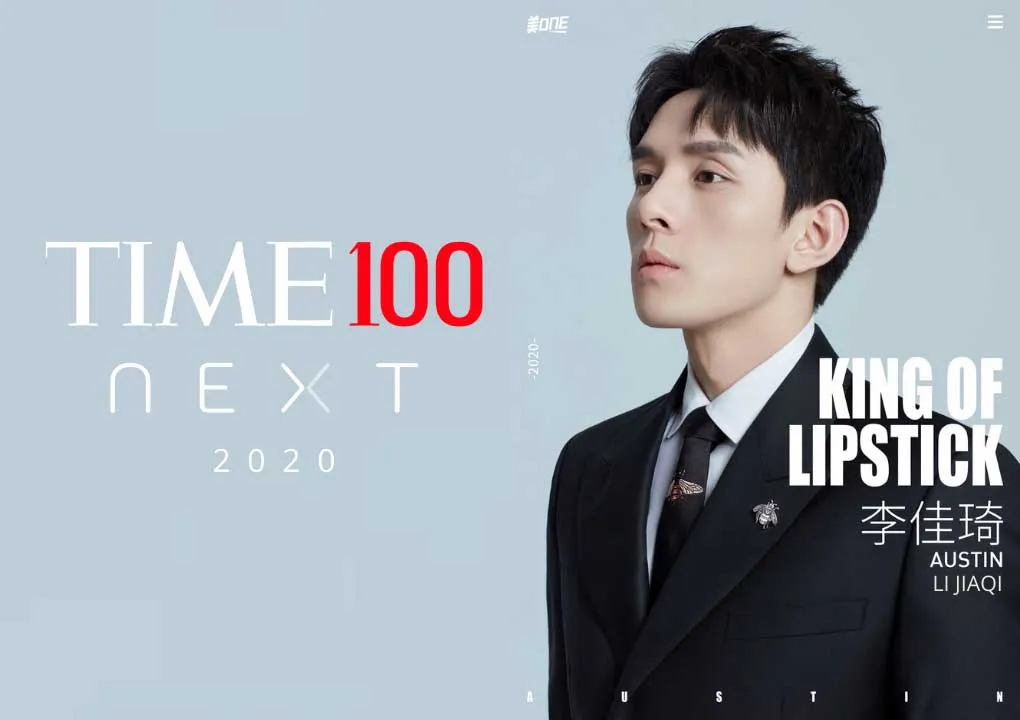
In February 2021, TIME magazine included him in the Next 100 list of emerging global leaders, alongside Dua Lipa and Amanda Gorman. That same year, his Singles’ Day (11.11) livestream generated over 10.6 billion RMB in a single day. By 2026, Li Jiaqi commands audiences across multiple platforms: approximately 50 million followers on Xiaohongshu, 35 million on Weibo, and 45 million on Douyin. These are not passive followers. They buy.
His nickname, “Lipstick King” (口红一哥, Kǒuhóng Yīgē), reflects his unique position. He is a man who wears lipstick on camera, gives blunt opinions, and has built an audience that trusts him precisely because he is not afraid to say a product is bad. When he tested a Tom Ford nude shade and laughed, saying “my lips are invisible!”, Tom Ford’s sales on that shade collapsed within hours. When he called Rouge Hermès shades unflattering for Asian skin tones, the feedback reached brand headquarters.
Why Li Jiaqi Works: The KOL-KOC Hybrid Model
The standard influencer pyramid in China divides talent into celebrities, top KOLs, mid-tier KOLs, and KOCs (Key Opinion Consumers). Li Jiaqi breaks this model. He has the reach of a top celebrity and the credibility of a trusted consumer. This combination is rare and extremely valuable.
For most foreign brands, a top KOL in China costs between 2 and 5 million RMB per campaign. A KOC costs between 2,000 and 20,000 RMB per post. The conversion rate from a KOC can be higher because the audience feels closer to the reviewer. But KOCs lack scale. Li Jiaqi offers both: massive scale and audience trust. His viewers believe he will tell them the truth, because he has done it repeatedly, even when it hurt established luxury brands.
In 2026, Chinese consumers are more skeptical than ever about sponsored content. The market is saturated with paid reviews. Platforms like Xiaohongshu now flag undisclosed brand partnerships. This makes authentic-feeling content more valuable, not less. Li Jiaqi has built his brand on the perception of honesty, which is why brands still compete aggressively for a slot in his sessions.
The Chinese Beauty Market: What Has Changed
The Chinese cosmetics market reached approximately 560 billion RMB in 2025 and continues to grow in 2026, driven by skincare, sun care, and “lazy beauty” product categories. Lipstick, once the star category, has been partially displaced by serums, SPF products, and multi-function base makeup. Domestic brands like Florasis (花西子), Perfect Diary, and Proya have grown aggressively and now compete directly with foreign players on ingredient quality and storytelling, not just price.
Live streaming e-commerce generated over 4.9 trillion RMB in 2025 across all categories, with beauty remaining one of the top three verticals. Douyin has overtaken Taobao as the primary discovery channel for beauty products, though Taobao Live remains dominant for final-purchase streaming. Douyin advertising is now a non-negotiable channel for any beauty brand serious about China.
Xiaohongshu has become the primary search engine for beauty product research among Chinese women under 35. Before purchasing anything, they search for 测评 (cèpíng, product review) content. Brands that do not have a presence there simply do not exist for this demographic.
The post-pandemic consumer is also more value-conscious. “Ingredient transparency” is a 2026 search trend: Chinese buyers want to know what is in the product and why it works. Brands that lead with honest ingredient claims, backed by KOL demonstrations, outperform those that rely purely on aspirational imagery.
How to Work With Chinese Influencers: A Practical View
Li Jiaqi is not accessible to most brands. His slots are limited, his fees are high, and his team is selective. That is fine. He is a benchmark, not a mandatory channel. The real lesson from his success is what it teaches you about the Chinese influencer market overall.
Before choosing any KOL or KOC in China, answer these questions:
- Audience fit: Does this influencer’s audience match your target buyer by age, city tier, and skin concern?
- Platform match: Is your product better suited for a Douyin short video, a Xiaohongshu post, or a Taobao live session?
- Content style: Does this influencer do ingredient-focused reviews, lifestyle content, or tutorial demonstrations?
- Sales history: Has this influencer generated measurable GMV (gross merchandise value) in your product category?
- Authenticity signals: Does the audience engage in the comments, or are the posts silent?
In 2026, micro-KOLs with 100,000 to 500,000 followers often produce better ROI for niche beauty brands than top-tier KOLs. The engagement rates are higher and the cost per conversion is lower. A fragrance brand, for example, will do better with a 200,000-follower perfume specialist on Xiaohongshu than with a mass beauty influencer who covers everything.
For WeChat, the influencer model is different. Long-form articles by beauty editors and micro-KOLs on WeChat Official Accounts still drive strong sales among 30-45 year-old female consumers, particularly for skincare and anti-aging categories. Do not ignore this channel just because Douyin is louder.
5 Trends Shaping Beauty KOL Marketing in China
- AI-generated seeding content is being penalized. Xiaohongshu’s algorithm now down-ranks posts that pattern-match to AI-generated text. Authentic, personal-voice content wins.
- Ingredient storytelling sells. KOLs who can explain why niacinamide, retinol, or bakuchiol works are driving more sales than those who only show results.
- Male beauty KOLs are expanding. Li Jiaqi normalized men in beauty. In 2026, male beauty influencers cover skincare, fragrance, and color cosmetics at scale.
- Domestic brand competition is fierce. Foreign brands face well-funded domestic challengers with deep KOL networks. You need better storytelling, not just brand heritage.
- Lower-tier city consumers are the growth market. Cities below tier 2 represent over 60% of new beauty shoppers. KOLs with strong followings in these markets are undervalued.