Brand analyses Brands by country of origin
Korean Beauty vs Western Beauty in China: Who's Winning?
5 min read
On this page
The battle between K-beauty and Western cosmetics in China has shifted dramatically since 2019. Korean brands that once seemed unstoppable are now caught between two forces: rising Chinese domestic brands eating their lunch at the affordable end, and French and American luxury labels holding firm at the premium end. In 2026, the real question is not whether K-beauty can beat Western brands. It is whether K-beauty can survive the rise of homegrown Chinese players. Here is what the market looks like today and what it means for foreign beauty brands entering China.
The Numbers: Where K-Beauty and Western Brands Stand
South Korea remains China’s largest cosmetics import source by volume, but the growth rate has collapsed. Korean cosmetics exports to China peaked around 2021 and have been under pressure ever since. By 2025, South Korea’s share of China’s cosmetics imports had dropped to roughly 33%, down from nearly 47% in 2019. Meanwhile, French brands gained ground at the premium end, with LVMH-owned labels (Givenchy Beauty, Dior Beauty, Guerlain) posting double-digit growth in China’s tier-1 cities through 2025.
Chinese domestic brands tell the other half of the story. Companies like Proya, Florasis (花西子), and Perfect Diary have taken serious market share from mid-range Korean players. Proya’s revenue grew over 20% year-on-year in 2025. Florasis built a strong premium positioning with a cultural Chinese aesthetic that resonates with post-90s and post-00s consumers. Korean brands like Innisfree and Etude House, which built their reputations on affordable quality, now face direct competition from domestic alternatives that Chinese consumers trust more and find more culturally relevant.
Western luxury brands are not immune either. L’Oréal, Estée Lauder, and Shiseido all reported slower China growth in 2024-2025 as the post-COVID recovery proved weaker than expected. Estée Lauder cut its China revenue forecast multiple times. The market is more competitive, more fragmented, and more demanding than at any point in the last decade.
Why Chinese Consumers Moved Away from K-Beauty
Three structural problems hit Korean brands at once.
The R&D gap caught up with them. K-beauty built its reputation on speed: launch a new product in 4 months, ride a trend, move on. That model works when you are the trend-setter. But Chinese domestic brands learned the same playbook and now execute it faster, with better local insight. When a Chinese consumer can choose between a Korean BB cream and a Florasis cushion compact designed with Chinese ink-painting aesthetics, many choose the local option. Novelty alone no longer sells.
THAAD lingered longer than brands expected. The 2017 political dispute over the US THAAD missile system on the Korean peninsula triggered a consumer boycott that damaged Korean brand equity in China. Some brands never fully recovered. The political sensitivity between China and South Korea remains a background risk that Western brands simply do not face at the same level.
Positioning got squeezed. Korean brands were strong in the mid-price range. That range is now crowded with Chinese domestic players who have strong digital marketing, better local KOL networks, and lower price points. Korean brands are too expensive to compete on price, and not prestigious enough to justify a premium over French or Japanese alternatives. The middle is the worst place to be.
What Western Brands Do Better in China
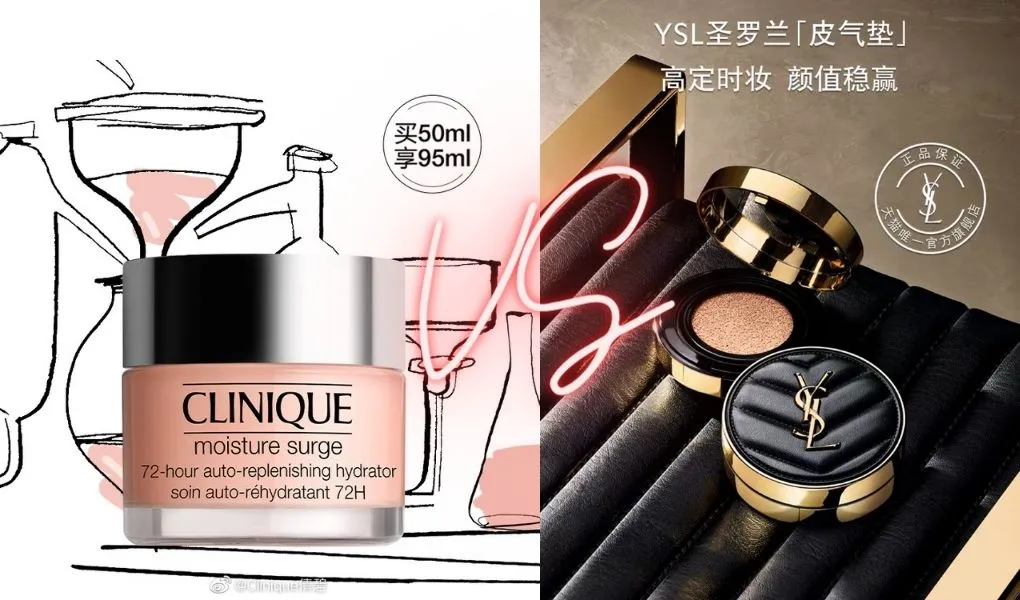
Western prestige brands benefit from one durable advantage: origin perception. French beauty, in particular, carries a luxury signal that Chinese consumers still associate with quality and aspiration. Dior Beauty, Charlotte Tilbury, and Chanel Beauty hold strong positions on Xiaohongshu (Little Red Book), where aspirational content about Parisian beauty routines generates consistent organic engagement.
American brands have a different profile. They compete on dermatology-backed claims and ingredient transparency. Brands like CeraVe, La Roche-Posay, and The Ordinary have grown their China presence significantly by targeting the “skincare ingredient” trend (成分党, chéngfèn dǎng), a group of informed Chinese consumers who research active ingredients before buying. This trend rewards brands that can back up their claims with clinical data.
Where Western brands still struggle: speed, localization, and price architecture. A French luxury brand can afford to move slowly. A Western mid-market brand cannot. Consumers on Douyin expect a new product story every few weeks. Western brands that try to run global campaigns with Chinese subtitles will lose to local or Korean competitors who build China-specific content from day one.
The Digital Battlefield: Xiaohongshu, Douyin, and WeChat
The platform mix has shifted. Xiaohongshu (RED) is now the single most important discovery platform for beauty in China. Over 300 million monthly active users, heavily female, skewing 18-35, with high purchase intent. A strong Xiaohongshu presence is not optional for any beauty brand targeting Chinese consumers. K-beauty brands like Laneige and IOPE still run active RED accounts but face fierce competition from domestic and Western brands that have invested heavily in the platform.
Douyin (Chinese TikTok) drives impulse purchases. The live commerce format is where a mid-tier KOL can sell 50,000 units of a serum in one 2-hour stream. Korean brands have been slower to adapt to Douyin live commerce compared to domestic Chinese brands. Western brands are catching up, with L’Oréal and Estée Lauder both running regular Douyin live sessions featuring top-tier hosts. See our guide on KOL and influencer marketing in China for how to structure these partnerships.
WeChat remains critical for CRM, loyalty programs, and private traffic. Brands that built WeChat mini-program ecosystems with member points, repurchase incentives, and exclusive drops are seeing stronger retention. This is less about acquisition and more about keeping customers who already converted.
The brands winning in 2026 are not choosing one platform. They run coordinated strategies: RED for discovery and UGC seeding, Douyin for live commerce, WeChat for retention. This is not cheap or simple. But it is the table stakes for any serious beauty player in China today.