E-commerce Tmall and the Alibaba ecosystem
How to Open a Tmall Store as a Foreign Merchant: Tmall Global Guide
8 min read
On this page
- What Is Tmall Global?
- Why Tmall Global Still Matters
- What’s Changed for Cosmetics Brands on Tmall Global
- Types of Tmall Global Stores
- Tmall Global Flagship Store
- Tmall Global Specialty Store
- Tmall Global Franchise Store
- How to Register on Tmall Global: Key Steps
- Costs to Expect
- What Makes a Tmall Global Store Succeed
- Final Thoughts
If you are a cosmetics or beauty brand looking to expand sales into China, Tmall Global should be at the top of your list. Tmall Global is the cross-border e-commerce platform of Tmall, which is the largest online retail platform in China. The ones that succeed on Tmall Global are the ones that understand the rules before they start, not after.
On Tmall Global, brands can sell products directly to consumers in China without needing a Chinese business entity. In this guide, I’ll walk you through how to register, how to set up your store, and what actually matters in 2026 for cosmetics brands selling on this platform.
What Is Tmall Global?
Tmall Global is the sub-platform of Alibaba Group-owned Tmall, an open platform marketplace in China. It is one of the largest cross-border e-commerce platforms in China and globally. It operates on a business-to-consumer model, unlike Taobao, which is mainly C2C.
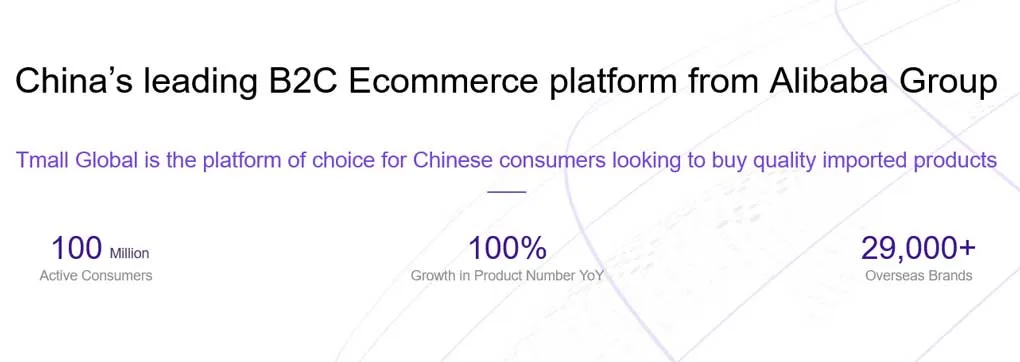
While Tmall holds the largest market share of the online retail segment in China, Tmall Global gives users access to genuine products from international brands. Chinese consumers increasingly distrust domestic grey-market channels. They want products shipped directly from the brand’s home country or from bonded warehouses in Chinese free trade zones. That authenticity signal is one of your biggest assets as a foreign brand.
Tmall Global allows foreign brands to sell products originally produced in their territory to Chinese consumers. They can do this without the legal requirements that apply to domestic Tmall stores, such as a Chinese business license or local registration with NMPA for most product categories.
Most Tmall Global products are stored in a bonded warehouse in Chinese free trade zones. Others are shipped directly from overseas warehouses. Each logistics model has trade-offs on speed, cost, and customs complexity. I generally recommend the bonded warehouse model for beauty brands doing consistent volume.
Why Tmall Global Still Matters
Some brands ask me whether Tmall Global is still worth it given the rise of Douyin and Xiaohongshu. My answer: yes, but the context has changed. In 2026, Tmall Global remains the dominant destination for high-consideration purchases. Skincare sets above 500 RMB, anti-aging serums, premium sun care: these categories still convert better on Tmall than anywhere else.
That said, the discovery funnel has shifted. Chinese consumers now find brands on Xiaohongshu (Little Red Book) or Douyin first, then go to Tmall to purchase. Your Tmall store is no longer the discovery channel. It is the closing channel. This means your store page, your product images, and your reviews need to be strong enough to convert traffic that already knows you from social.
What’s Changed for Cosmetics Brands on Tmall Global
A few updates matter specifically for beauty brands this year.
Ingredient transparency is now expected. Chinese Gen Z consumers read ingredient lists. They look for specific actives: niacinamide, tranexamic acid, retinol, peptides. They cross-check them on apps like Meicheban before buying. Your product detail pages need to lead with ingredients, not just claims. I’ve seen brands lose sales because their pages were too marketing-heavy and not ingredient-specific enough.
AI-powered search inside Tmall is changing product ranking. Tmall’s internal search now surfaces products based on user behavior patterns, not just keyword matching. Your product titles and backend tags need to align with how Chinese consumers actually search. “Whitening” is less effective now. “Brightening” and specific ingredient names perform better.
Live streaming on Tmall is not optional anymore. In 2026, brands that do not run regular live streams on their Tmall stores see significantly lower organic visibility. Alibaba’s algorithm rewards active stores. A flagship store gives you access to the full live streaming infrastructure inside Alibaba’s platform.
Douyin drives Tmall searches. When a Douyin video about your brand goes viral, Chinese consumers go to Tmall to buy. This cross-platform flow means your Tmall store needs to be live and fully stocked before you run any Douyin campaign. Timing matters. I’ve seen brands miss sales spikes because their Tmall store was not ready when the Douyin traffic arrived. See our notes on selling cosmetics in China for the full channel picture.
Types of Tmall Global Stores
You can set up three types of stores on Tmall Global. Your choice depends on your business structure and what you sell. The three types are:
- Tmall Flagship store
- Tmall Specialty store
- Tmall Franchise store
Tmall Global Flagship Store
Flagship stores are the right choice for foreign brands that have trademarks and copyrights but no physical presence in China and no Chinese retail business license. A flagship store lets you operate fully under your own brand identity on Tmall.
Flagship stores give you access to the full range of features in Alibaba’s platform, including live streaming, brand zones, and promotional tools during major sales events like 11.11 and 618. If you own your trademark, a flagship store is the standard path.
There are requirements you must meet before opening a flagship store. Your trademark must be registered in the relevant class. You must submit brand authorization documents, a valid business license from your home country, and proof of overseas operations. Tmall reviews applications carefully. Incomplete submissions are the most common reason for delays.
Tmall Global Specialty Store
A specialty store is designed for merchants who are authorized distributors of one or more brands. You do not need to own the trademark. You need documented brand authorization. This model works well for regional distributors or multi-brand beauty retailers entering China for the first time.
Tmall Global Franchise Store
A franchise store is for merchants who sell products from multiple brands across one or more product categories. This is less common for cosmetics brands entering directly, but it fits well for consolidated beauty distributors managing several international labels.
How to Register on Tmall Global: Key Steps
The registration process has a few mandatory steps. Here is what you need to prepare:
- A valid overseas business license from your home country
- Trademark registration certificate in the relevant category (for flagship stores)
- Brand authorization letter if you are a distributor
- A deposit ranging from 50,000 to 150,000 RMB depending on category and store type
- Annual service fee between 30,000 and 60,000 RMB depending on your category
- A Chinese Alipay merchant account or a third-party payment processor linked to your Tmall account
The review process takes between 4 and 8 weeks. Tmall’s team checks your documents carefully. In my experience, brands that prepare a complete dossier before submitting move through review significantly faster than those who submit and wait for feedback.
Costs to Expect
Opening costs have not changed dramatically, but operating costs have increased. Here is a realistic picture for a cosmetics brand launching on Tmall Global in 2026:
- Deposit: 50,000 to 150,000 RMB (refundable if you close the store)
- Annual platform fee: 30,000 to 60,000 RMB
- Commission per sale: 2 to 5% depending on category
- Store setup and design: 15,000 to 50,000 RMB for a professional setup
- Initial paid traffic (through Tmall’s Zhitongche tool): budget at least 30,000 RMB for the first 3 months
- Bonded warehouse setup and logistics: variable, but plan for 20,000 to 40,000 RMB in the first year
The total entry cost for a serious launch is typically between 200,000 and 400,000 RMB. Brands that budget less than this tend to underinvest in traffic and reviews, then wonder why the store does not grow.
What Makes a Tmall Global Store Succeed
I’ve seen brands open stores and see zero traction for 6 months. The difference is almost never the product. It is always the execution.
Here are the factors that actually move the needle:
- Review velocity in the first 90 days. Early reviews set your store’s baseline ranking. Seed your reviews through KOC campaigns before and immediately after launch.
- Product page quality. Chinese consumers expect detailed product pages with ingredient lists, usage videos, before-and-after results, and Chinese-language descriptions. Translating your Western product page directly is not enough.
- Participation in Tmall events. 11.11, 618, and Double 12 are not optional. Brands that skip these events lose visibility for months afterward.
- Cross-channel traffic. Your Xiaohongshu content and Douyin ads need to drive traffic to your Tmall store. An isolated store with no external traffic rarely grows organically.
For brands serious about building a real presence, I always recommend treating Tmall as one part of a wider China digital strategy, not the whole strategy. The brands that win combine Tmall with active social channels and a KOL program. If you want to understand the full picture of how KOLs fit into this, take a look at how KOL marketing in China connects to platform performance.
Final Thoughts
Tmall Global remains one of the most credible channels for foreign cosmetics brands entering China. It gives you access to over 900 million consumers. It signals authenticity. It connects to the full Alibaba promotional calendar. But it requires real investment, both financial and operational.
In 2026, the brands that grow on Tmall Global are the ones that treat it as a long-term channel, not a quick sales fix. They invest in content, in reviews, in live streaming, and in cross-platform traffic. They understand Chinese consumers well enough to localize their product story, not just translate it.
If you are thinking about opening a Tmall Global store this year, start the documentation process early. The registration takes time. Use that time to build your Xiaohongshu presence and your KOC network so you have traffic ready when your store goes live.