Brand analyses C-beauty: China's own brands
Florasis (Hua Xizi) China Marketing Strategy: What Beauty Brands Can Learn
5 min read
On this page
Florasis, known in Chinese as 花西子 (Hua Xizi), is one of the most studied beauty brands in China right now. Founded in 2017 in Hangzhou, it went from zero to category leader in under three years, and in 2026 it remains a benchmark for domestic and foreign brands alike. The Guochao wave did not die. It matured. And Florasis grew with it. If you are a foreign beauty brand trying to break into China, studying Florasis is not optional. It shows you what Chinese consumers actually respond to, and why most Western brands still get it wrong.
What Made Florasis Different From Day One
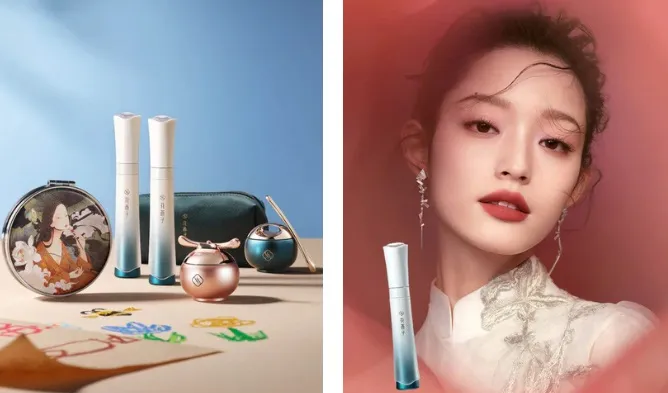
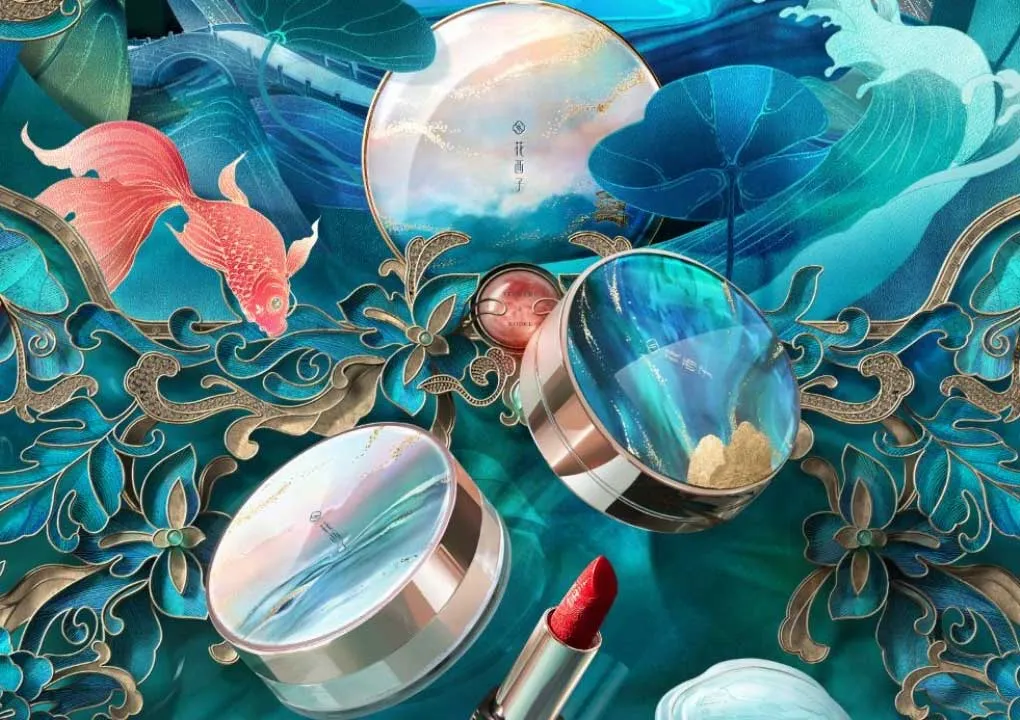
Florasis did not compete on price or ingredients. It competed on identity. The brand built its entire visual world around traditional Chinese aesthetics: floral engravings on compacts, packaging inspired by imperial motifs, product names drawn from classical poetry. Every product looked like a collectible. That was deliberate.
The target demographic was women aged 20 to 35, a group that had grown up with both TikTok-style content and a renewed pride in Chinese culture. Florasis gave them something to feel proud of buying. In 2026, this Guochao positioning is even more deeply embedded. Chinese consumers, especially younger ones, are less interested in European heritage branding than they were five years ago. They want products that feel like theirs.
Florasis also moved fast on Tmall. Its flagship store launched in March 2017, making it one of the earliest direct-to-consumer beauty brands to treat Tmall as a primary channel, not an afterthought. That early mover advantage compounded over years of algorithm training, review accumulation, and live-stream audience building.
Florasis Tmall Strategy: What Still Works
Tmall remains the dominant platform for premium beauty in China. In 2025, Tmall beauty GMV exceeded 320 billion RMB, and flagship stores continue to be the main trust signal for first-time buyers. Florasis peaked at second place in cosmetics sales during the 2020 Double 11, with 500 million RMB in total sales, a 259% increase year-on-year. By 2024 and 2025, the brand had consolidated its position among the top five domestic beauty brands by Tmall revenue.
What Florasis does on Tmall that most foreign brands do not:
- It uses Alimama’s targeting tools to run reactivation campaigns on lapsed buyers, not just acquisition campaigns on new ones.
- It treats the product detail page as content, not just a spec sheet. Buyer photos, video reviews, Q&A sections are all managed actively.
- It syncs its Tmall store promotions with live-stream schedules, so viewers have a direct path to purchase during peak moments.
- It uses Tmall’s membership system to reward repeat buyers and collect first-party data.
For foreign brands entering Tmall today, the bar is higher than in 2020. You need a minimum 12-month content and traffic plan before you can expect consistent sales velocity. Tmall is not a storefront you open and wait.
Xiaohongshu, Douyin, and the Multi-Channel Reality
Florasis was an early adopter of Xiaohongshu (Little Red Book) for product seeding. In 2026, that channel is more important than ever for beauty. Xiaohongshu has over 300 million monthly active users, with beauty and skincare as the top content categories. The platform functions as a search engine for product discovery. Chinese women search “best foundation for oily skin 2026” on Xiaohongshu before they search on Baidu or Tmall.
Florasis seeds content through a mix of mega-KOLs for awareness and micro-KOLs (under 100,000 followers) for credibility. The micro-KOL content looks more like a friend’s recommendation than an ad. That distinction matters enormously to the Chinese beauty consumer in 2026, who is more skeptical of polished sponsorships than she was in 2019.
On Douyin, Florasis runs paid Douyin advertising alongside organic content from creators. The brand’s live-stream rooms on Douyin are active daily, with hosts who understand the product story well enough to explain the cultural references behind each product. That is not something you can outsource to a generic live-stream agency. It requires briefing, training, and ongoing quality control.
Weibo is less dominant than it was in 2018, but Florasis still uses it for official announcements, celebrity collaborations, and crisis communication. Think of it as the brand’s press channel, not its sales channel.
KOL and Influencer Strategy: Quality Over Volume
Florasis built its early reputation partly through a high-profile partnership with Li Jiaqi, China’s most famous beauty live-streamer. That partnership drove massive awareness. But in 2026, the brand’s KOL strategy has diversified significantly.
The current mix looks like this:
- Macro-KOLs (1M+ followers) for new product launches and seasonal campaigns.
- Mid-tier KOLs (100K to 1M) for category-specific content: makeup tutorials, skin type guides, festival looks.
- Micro-KOLs and KOCs (Key Opinion Consumers) for authentic reviews and long-tail SEO on Xiaohongshu.
The cost of macro-KOL partnerships has increased sharply since 2021. A single post from a top-tier beauty influencer now runs between 500,000 and 2,000,000 RMB depending on exclusivity. Florasis can absorb that. Most foreign brands cannot. This is why the micro-KOL and KOC approach is more realistic for brands entering the market with budgets under 5 million RMB per year.
For more on building a cosmetics marketing strategy in China, you need to understand that influence is not just about reach. It is about relevance to a specific consumer segment. A skincare brand targeting women over 40 should not be chasing the same KOLs as a Gen-Z color cosmetics brand.
WeChat and CRM: The Retention Layer
What most Western brands miss about Florasis is the WeChat layer. Florasis uses its WeChat Official Account and Mini Program as a CRM system. Buyers from Tmall and Douyin are moved into WeChat ecosystems where the brand can communicate directly, run member-only promotions, and gather product feedback.
In 2026, WeChat Mini Programs have over 900 million monthly active users. Florasis runs limited edition drops exclusively through its Mini Program, creating urgency and rewarding loyal followers. This is a strategy any beauty brand can replicate with the right technical setup and content team.
The key metric here is repurchase rate. China’s beauty market is competitive enough that acquiring a new customer costs three to five times more than retaining an existing one. Florasis’s WeChat CRM strategy is how it keeps repurchase rates above the category average.