KOLs and Douyin Douyin for beauty brands
Douyin E-Commerce (TikTok) Case Study: Beauty Brands
6 min read
On this page
- Summary
- Record-breaking $15.4 billion in the first three quarters
- How Douyin is reshaping retail sales in China
- Top beauty brands on Douyin: case studies
- What has changed
- AI-powered product discovery on Douyin
- Ingredient-led content is winning
- The Douyin and Xiaohongshu connection
- KOL and KOC: finding the right mix
- Domestic brands versus international brands on Douyin
- What you need to enter Douyin e-commerce
Douyin (TikTok’s Chinese counterpart) is not just an entertainment app. It’s where Chinese consumers decide what to buy, in real time, from a phone screen.
I’ve watched Douyin go from a video novelty to the most aggressive e-commerce channel in beauty. The numbers are serious. The opportunity is real. But so are the mistakes brands make when they jump in without understanding the platform.
In this article, I’ll give you a detailed breakdown of Douyin’s growth in beauty, what’s changed in 2026, and what actually works for brands entering this market.
Summary
- Douyin hit $15.4 billion in beauty sales in the first three quarters of last year, a 43.5% year-on-year increase.
- Top brands like L’Oreal, Proya, and Lancôme built their China sales strategy around the platform.
- Chinese domestic brands dominate GMV, but international brands can compete with the right local approach.
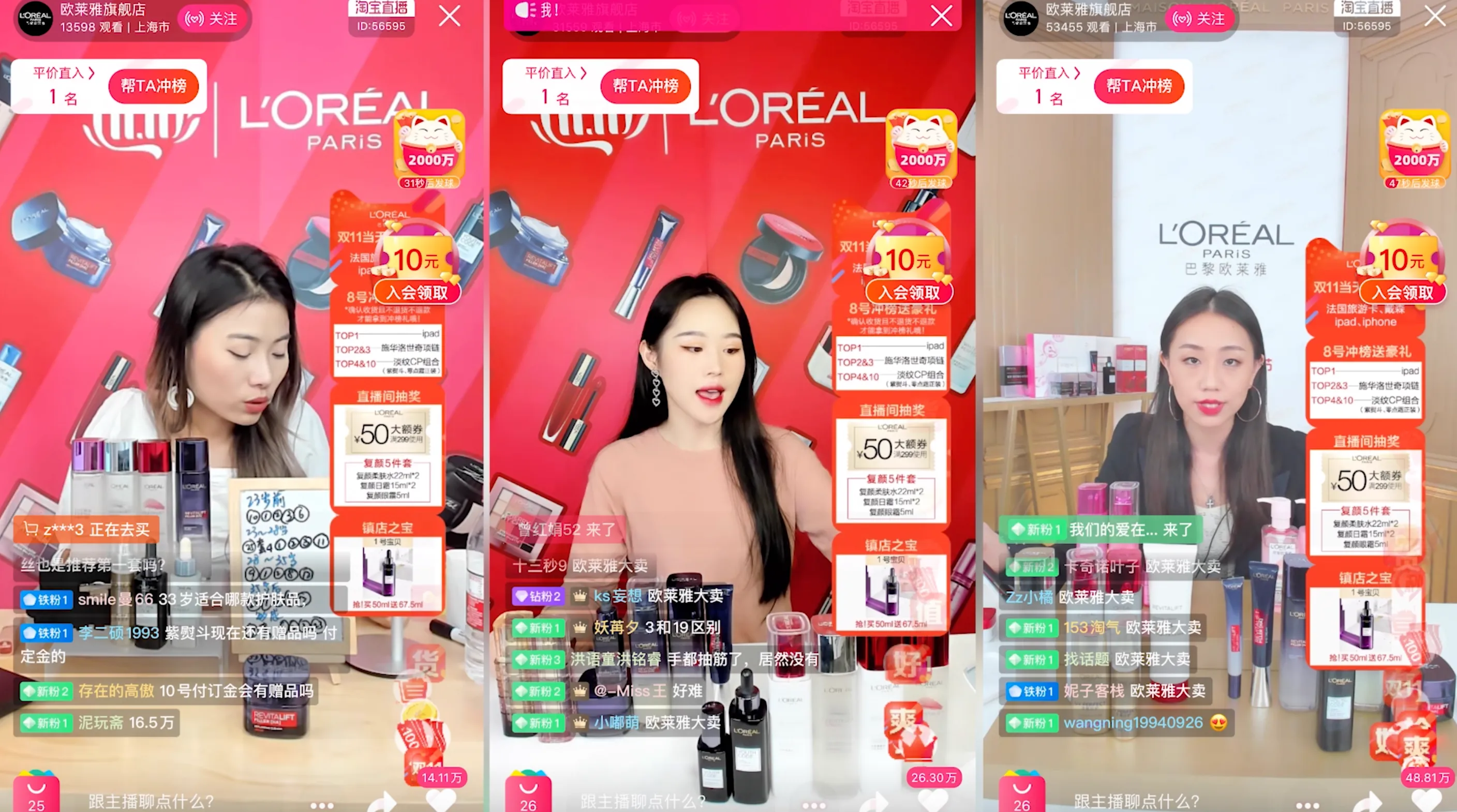
- KOL livestreams remain a primary sales driver. One host made $13.7 million in seven days selling beauty products.
- In 2026, ingredient-led content and multi-platform presence (Douyin plus Xiaohongshu) are the winning formula.
- Male beauty on Douyin grew 365% in a single year. Niche categories are wide open.
Record-breaking $15.4 billion in the first three quarters
Douyin beauty sales hit $15.4 billion in just the first three quarters of last year. That’s a 43.5% year-on-year growth, the highest number the platform had reached at that point in any calendar year.
Douyin’s impact on the beauty market is massive. One live-seller generated $13.7 million selling beauty products in seven days. That kind of volume, from a single host, tells you everything about the scale of what this platform can produce. By Q1 2026, cumulative beauty GMV on Douyin crossed $20 billion, according to Feigua Analytics. The growth has not slowed.
How Douyin is reshaping retail sales in China
Douyin plays a central role in growing the beauty market. The Douyin and RED Cosmetics Industry Marketing Reports confirm that a significant share of Gross Merchandise Volume for beauty items now comes directly from the platform.
Chinese home-grown beauty brands are a dominant force here. They make up a large chunk of all beauty product sales on Douyin, as Feigua Analytics has shown. Male beauty labels found a wide-open opportunity too, with a 365% jump in sales within a single year. Douyin is now a core driver of retail sales across China, not a secondary channel.
What I’m seeing in 2026 is structurally different from three years ago. The platform has built a complete purchase funnel inside one app. Discovery, research, purchase, and post-purchase content all happen on Douyin. Brands that understand this don’t need to push consumers off-platform to close a sale. Everything happens inside the app, fast.
For a detailed view of how to run paid placements on the platform, see our guide to Douyin advertising for beauty brands.
Top beauty brands on Douyin: case studies
Here’s what the top performers actually did. L’Oreal worked with music star Ouyang Nana and generated significant sales volume from that single collaboration. Proya, the Chinese cosmetics brand, made about 177 million yuan in online sales. Lancôme partnered with over 20 top beauty influencers on Douyin. That multi-KOL approach gave them consistent reach across different audience segments and price points.
Data shows that platform GMV in the beauty sector exceeded $273 million during Singles Day alone. These are not small numbers for a channel that didn’t exist as a shopping destination five years ago.
What has changed
AI-powered product discovery on Douyin
Douyin’s recommendation algorithm has become far more precise. In 2026, the platform uses behavioral data, search history, and viewing patterns to surface beauty products before consumers actively look for them.
This changes how you enter the platform. You don’t need a massive existing audience to sell on Douyin. You need the right content format and a product that fits a clear consumer need. But content quality still matters. Low-effort videos don’t get amplified, regardless of how good the product is. The algorithm rewards watch time and completion rates, not production budgets.
Ingredient-led content is winning
Chinese beauty consumers in 2026 are more informed than ever. They read ingredient lists. They ask about niacinamide, retinol, ceramides, and vitamin C derivatives. They compare formulas on Xiaohongshu before buying on Douyin.
Brands know that pure lifestyle content no longer converts as well as it did in 2021. The content that performs now explains what’s in the product, why it matters for specific skin concerns, and what results to expect. Dermatologist-style breakdowns, lab footage, and side-by-side ingredient comparisons work consistently.
Domestic brands like Proya and Winona built their dominance partly on this approach. They speak directly to Chinese skin concerns: whitening, hydration, sensitivity, barrier repair. International brands that translate European messaging without adaptation struggle to connect.
The Douyin and Xiaohongshu connection
In 2026, the consumer journey in beauty rarely happens on a single platform. A consumer discovers a product on Douyin. She searches for reviews on Xiaohongshu. She compares prices on Tmall. She comes back to Douyin to buy during a livestream. This loop repeats millions of times a day across the beauty category.
This multi-platform journey means you cannot invest in one channel alone. Brands that appear on both Douyin and Xiaohongshu with consistent product messaging see significantly higher conversion rates.
KOL and KOC: finding the right mix
Top KOLs still drive volume. A single livestream with a Tier 1 influencer can sell out weeks of inventory in hours. But commission structures have become aggressive, and the margin pressure is real for brands that rely exclusively on big names.
The smarter approach in 2026 is a layered strategy. Tier 1 KOLs for reach and credibility. Mid-tier creators for consistent content volume. KOCs (Key Opinion Consumers) for authentic reviews that build search presence on both platforms. This costs less per sale and builds a more durable brand position over time.
Read more about KOL marketing in China and how to structure influencer partnerships that deliver real return.
Domestic brands versus international brands on Douyin
Chinese brands have a structural advantage on Douyin. They move faster. They produce content daily. They spot local trends before they become trends. Proya, Florasis, Winona, and a dozen others built nine-figure businesses largely through Douyin over the past three years.
International brands can compete. But they need to stop treating Douyin as a media channel and start treating it as a sales channel with its own rules.
Price sensitivity has also increased since 2024. Chinese consumers compare prices more carefully. Brands that offer exclusive Douyin deals, bundles, or limited editions tied to livestream events drive better conversion than those selling at fixed retail prices with no live commerce strategy.
What you need to enter Douyin e-commerce
I’ll be direct. Douyin is not a platform you can test with a minimal budget and minimal commitment. You need a flagship store setup, content production capacity, KOL relationships, and live commerce capability. That’s a real investment, and it takes time to get right.
But for beauty brands with a product that fits the market, the return is real. The brands that fail are those that launch without local insight, use translated Western campaigns, and expect the algorithm to do the work for them.
Also see our full guide on selling cosmetics in China for the complete channel picture beyond Douyin alone.