Chinese beauty consumers How they discover, trust and buy
How Young Chinese Discover and Buy Beauty Brands
7 min read
On this page
- How Gen Z and Millennials in China Discover and Buy Beauty Products
- 1. Red Xiaohongshu: Where Inspiration Begins
- 2. Douyin: The Theatre of Emotion
- 3. Livestreaming: From Discovery to Conversion in Real Time
- 4. WeChat and Private Traffic: The Invisible Power Channel
- 5. The Role of Community and Trust
- 6. How the Buying Journey Really Flows
- 7. The “Psychology” of Purchase
- 8. The Power of KOLs and KOCs
- 9. The Rise of the Hybrid Shopper
- 10. The Secret Ingredient: “Emotion”
How Gen Z and Millennials in China Discover and Buy Beauty Products
The way Chinese consumers discover and buy beauty products has completely transformed.
Forget traditional advertising; the new generation doesn’t browse; they scroll. They don’t believe in brand slogans; they believe in stories. They don’t follow a linear buying journey; they dance between platforms, moods, and moments.
In China today, Gen Z and Millennials don’t just consume beauty; they live it digitally. Their beauty experience happens through Xiaohongshu, Douyin, WeChat private communities, and livestreams that blend entertainment, authenticity, and instant gratification.
Let’s break it down together.
1. Red Xiaohongshu: Where Inspiration Begins
For beauty, Xiaohongshu (RED) is not just a platform; it’s the beauty bible of China’s young consumers.
Every beauty journey starts here. A Gen Z girl in Chengdu or a young professional in Shanghai will open RED before she even Googles a brand. She will scroll through hundreds of “real user” notes; selfies; honest reviews; and tutorials.
RED is where trust is built. The platform’s secret weapon is authenticity. Users believe each other more than they believe the brand.
Micro-influencers, often with only a few thousand followers, can have massive impact because they feel real. They show texture, lighting, daily use. No filters; no fakeness.
If you’re a beauty brand, your job is not to post ads; it’s to plant emotions. The Chinese call it 种草 (zhongcao): planting the seed of desire. A good RED post is storytelling in motion – “I discovered this mask before a date,” “This serum saved my skin after a trip,” “This lipstick gives me confidence at work.”
The best brands use a mix of UGC (user-generated content) and KOL seeding. They create waves of small mentions that feel organic, not orchestrated. It’s the art of being everywhere without looking like you’re trying too hard.
Xiaohongshu (RED): The Best Social Media for Beauty Brands in China
2. Douyin: The Theatre of Emotion
Once interest is planted on RED, the next stop is often Douyin; China’s most powerful platform for turning curiosity into action.
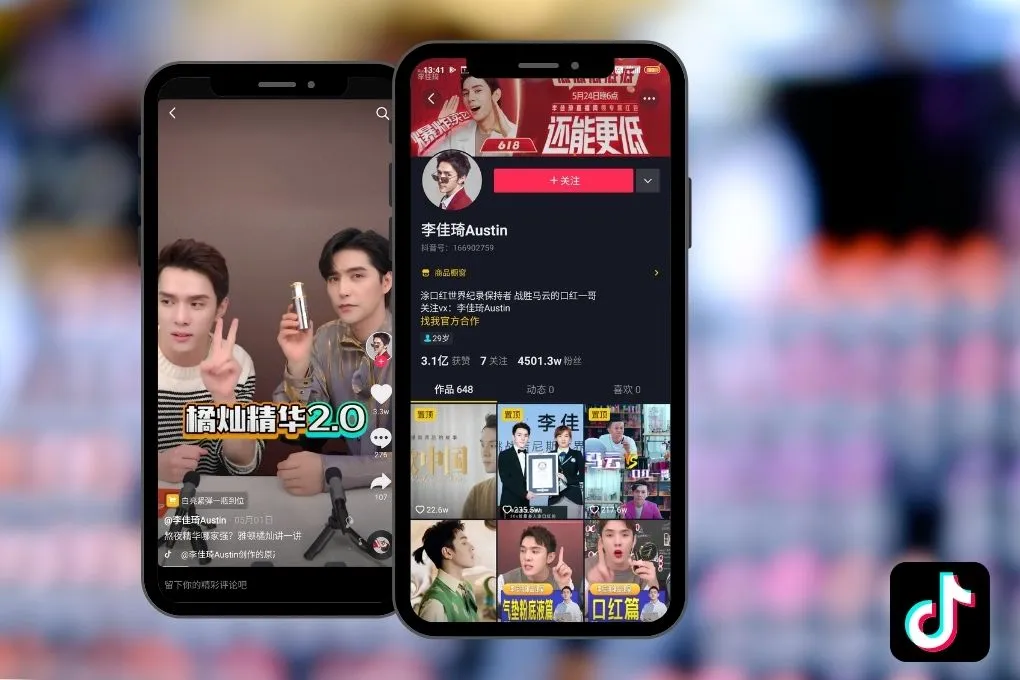
Douyin is where beauty becomes entertainment. Every second counts.
A 15-second clip showing a serum melting into the skin; a lipstick applied in one smooth motion; a “wow” before-and-after transition, yes… that’s the new advertising.
But here’s the secret: Douyin doesn’t sell by pushing; it sells by feeling. The content that converts isn’t polished; it’s alive.
One viral Douyin video can sell out an entire product line overnight. But it’s not luck. The best-performing brands work with creators who know how to make the viewer feel something : surprise, delight, curiosity, trust.
And when that emotional spark hits, conversion is just one swipe away. Because Douyin is built for instant buying; every video has a link. You like what you see; you tap; you buy; you brag.
For brands, the strategy is to co-create, not control. Let KOLs interpret your product in their voice. Let them test, react, laugh, even fail. It’s that rawness that builds connection.
Douyin Marketing: How to Market Your Beauty Brand on the Chinese Tik Tok?
3. Livestreaming: From Discovery to Conversion in Real Time
Livestreaming is where China’s beauty magic truly happens.
It’s not an event; it’s a culture. Millions tune in nightly to watch their favorite hosts talk, test, and recommend products in real time.
Livestreamers like Austin Li (known as the “Lipstick King”) can sell thousands of units in seconds. But the real power of livestreaming isn’t the hype; it’s the intimacy.
It feels like watching a trusted friend who understands your needs, shows you real results, and answers your questions instantly.
In livestreaming, emotion meets urgency. Flash discounts; limited-time offers; countdowns – all designed to trigger immediate purchase.
For brands, this channel is essential. But success comes from preparation. You can’t improvise in livestreaming. You need stock, training, script, and strong host collaboration.
The smartest SMEs I’ve worked with don’t chase big hosts; they work with micro-streamers who have smaller but more loyal audiences. They build trust, episode by episode, until they own a niche.
Livestreaming is not about selling one night; it’s about building momentum every night.
4. WeChat and Private Traffic: The Invisible Power Channel
After RED and Douyin come the private spaces – WeChat groups, mini-program stores, and brand communities.
This is the retention layer of China’s digital ecosystem. Here, consumers don’t just follow a brand; they belong to it.
WeChat is where long-term relationships are built. Once someone buys your product from Douyin or Tmall, they might be invited to join your WeChat community. From there, your brand can share tips, early access, and personal messages.
This private traffic (私域, siyu) is what makes the Chinese digital model unique. It’s not about one sale; it’s about continuous conversation.
Many beauty brands use WeChat to run loyalty programs, exclusive offers, and 1-to-1 customer service. Some even have virtual beauty advisors who send personalized skincare recommendations daily.
For a small brand, this is gold. You don’t need huge ad budgets; you need intimacy. WeChat lets you be close, personal, and human.
5. The Role of Community and Trust
Both Gen Z and Millennials in China are skeptical of big promises. They trust people, not campaigns.
That’s why the most successful beauty brands build communities before customers.
RED notes, Douyin videos, WeChat groups, livestream comments – they all form an ecosystem of micro-trust. When consumers see real people discussing your product, it feels authentic.
User-generated content is now your most valuable currency. Encourage it; reward it; repost it.
If your consumers are talking about you, you’ve already won half the game.
6. How the Buying Journey Really Flows
The Chinese buying journey is not linear; it’s circular.
A typical path looks like this:
A user sees a friend mention a lipstick on RED; she watches a Douyin video about it; she checks reviews on RED again; she watches a livestream to compare prices; and finally, she buys through a WeChat mini-store.
All of that can happen in a single evening.
It’s fast; fluid; emotional.
For a Western marketer, it feels chaotic. For Chinese consumers, it’s perfectly natural. They enjoy the process because it’s interactive and communal.
To succeed, your brand must exist on every step of this journey – from discovery to validation to conversion to retention.
You don’t need to dominate every channel, but you must connect them. RED plants desire; Douyin creates excitement; livestreaming drives action; WeChat builds loyalty.
That’s the real funnel.
7. The “Psychology” of Purchase
young like Gen Z and Millennials buy for identity as much as for function.
They ask: Does this product fit my vibe?
Does it align with my values?
Does it look good on my feed?
They want beauty with personality. That’s why storytelling, design, and emotion matter more than product specs.
In China, the emotional story behind a product often sells better than the formula inside.
It’s not the cream; it’s the confidence.
Not the lipstick; the mood it creates.
Your communication must therefore blend aspiration with relatability. Show real people. Show cultural touchpoints. Make your product feel like a friend, not a promise.
8. The Power of KOLs and KOCs
KOLs (Key Opinion Leaders) still drive massive influence, but today the market is moving toward KOCs (Key Opinion Consumers).
KOLs bring reach; KOCs bring trust.
Smart brands mix both. They use KOLs for visibility and KOCs for credibility.
The magic happens when a mega-influencer introduces your brand on Douyin and hundreds of micro-consumers validate it on RED the same week.
That’s how trends explode in China – not from ads, but from digital whispers that become collective desire.
What is KOC Marketing: How it Helps you Increase Sales in China
9. The Rise of the Hybrid Shopper
Chinese Gen Z and Millennials shop in a hybrid way. They discover online but still value offline experiences.
Pop-up stores, beauty vending machines, and AR try-on mirrors connect the digital with the physical.
For instance, a user might see a new lipstick on Douyin, try it in-store via AR, and then buy it online through a livestream discount.
The journey is borderless; the emotion is continuous.
Your role as a brand is to create consistency across all touchpoints – same storytelling, same emotion, same message.
10. The Secret Ingredient: “Emotion”
At the heart of it all, emotion drives everything, yes
You can have the best formula, the perfect influencer, the ideal pricing; but if your story doesn’t make people feel, it won’t move them.
Emotion is not a soft skill; it’s the ultimate marketing advantage in China.
When you create content that sparks joy, curiosity, or empathy, you enter people’s lives – not just their screens.