Distribution and retail Beauty retail chains and store formats
Sephora In China – The French Beauty Chain Is Going All-in
7 min read
On this page
- Key Takeaways
- Sephora’s Expansion In China
- Opening Of New Stores
- Partnership With JD.com
- Sephora’s China Strategy
- The Numbers Behind The Market
- Douyin: Where Discovery Happens
- Xiaohongshu: The Ingredient-Led Conversation
- Tmall: The Flagship Still Matters
- AI Beauty Discovery
- Ingredient Trends Sephora Is Riding
- What Other Brands Can Learn From Sephora In China
- Challenges Sephora Still Faces
- Conclusion
Sephora: a name synonymous with beauty and luxury. As a French multinational retailer of personal care and beauty products, Sephora has made an indelible mark on the global stage. Founded in 1970 by Dominique Mandonnaud, it began its journey as a humble perfume shop in France.
Today, Sephora boasts nearly 340 brands under its umbrella, including its own private label, Sephora Collection. This impressive portfolio is further strengthened by being owned by LVMH Moët Hennessy Louis Vuitton, a legendary player in the luxury goods market.
With such strong backing and a reputation for excellence, it comes as no surprise that Sephora turned its eyes toward China, where demand for high-quality beauty products keeps rising.
Sephora’s approach here is one of the most studied cases in the market. In this article, I break down what they’re doing right, what changed in 2026, and what other brands can learn from it.
Key Takeaways
- Sephora has over 200 physical stores in China and a partnership with JD.com that anchors its e-commerce position.
- To appeal to Chinese consumers, Sephora has adapted its product offerings and marketing by collaborating with local brands, using Douyin, XHS (Xiaohongshu), and WeChat for promotions, and running personalized digital campaigns.
- Despite intense competition from local and international brands, Sephora keeps investing in China, with new store formats, AI-powered beauty discovery, and ingredient-led content strategies.
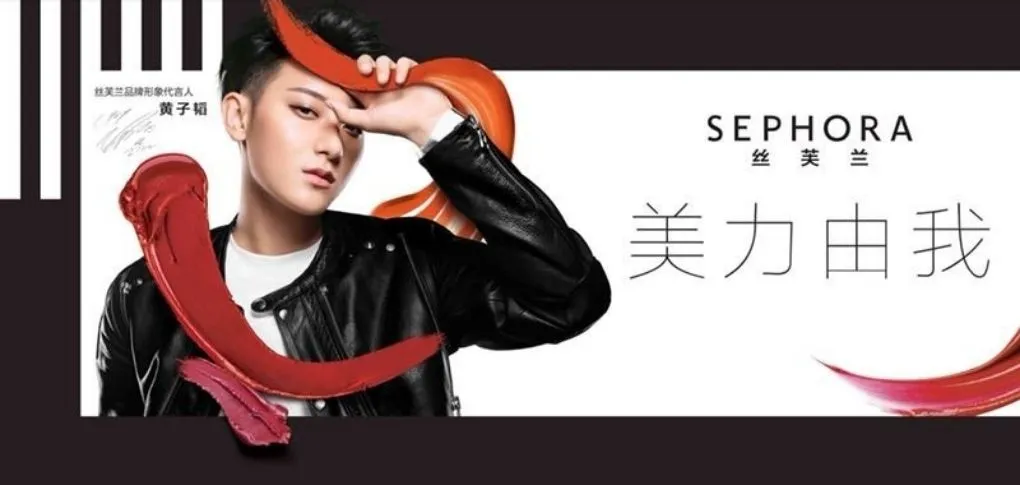
Sephora’s Expansion In China
Opening Of New Stores
Sephora has been aggressively opening new stores in China. One strong example is Shanghai’s Store of the Future, which opened in 2023. This store offers customers an immersive shopping experience through technology and personalized services.
By consistently launching new stores with unique offerings, Sephora generates real buzz around each opening. It reaches more people across different cities and taps into emerging markets. The pace speaks for itself: store openings went from 18 per year to 38 in recent years.
Partnership With JD.com
In 2015, Sephora partnered with JD.com, China’s second-largest e-commerce platform. This collaboration gave Sephora direct access to JD’s massive consumer base and logistics infrastructure.
In 2021, they launched a “one-hour” beauty shopping service with JD. Customers order and receive delivery within an hour. That kind of speed matters in China. Convenience is not a nice-to-have. It is expected.
Sephora’s China Strategy
The Numbers Behind The Market
China’s cosmetics market reached approximately 520 billion RMB in 2025, and growth continues in 2026, driven by younger consumers in tier-2 and tier-3 cities. I’ve seen this shift happen over the last three years. The big money is no longer just in Shanghai or Beijing. Brands that only focus on top-tier cities miss 40% of the opportunity.
Sephora understands this. Their new store openings in 2025 and 2026 are heavily weighted toward cities like Chengdu, Wuhan, and Changsha, where middle-class spending on beauty is rising fast.
For any brand looking to enter or grow in this market, the approach to cosmetics marketing in China must be localized at the city level, not just the national level.
Douyin: Where Discovery Happens
Douyin is no longer just a marketing channel. It is the primary product discovery engine for beauty consumers under 35 in China. Sephora has invested heavily in Douyin live-streaming, running daily sessions with trained beauty consultants and KOLs.
The platform’s algorithm rewards consistency and authenticity. Sephora’s approach, using in-house staff alongside influencers, builds credibility that pure KOL campaigns sometimes miss.
Their Douyin advertising strategy mixes paid topview ads for brand awareness with organic content from store staff and brand partners. That combination works. Paid alone does not.
Xiaohongshu: The Ingredient-Led Conversation
XHS (Xiaohongshu, or Little Red Book) has become the go-to platform for ingredient-conscious consumers. In 2026, Chinese beauty buyers are more educated than ever. They search for retinol percentages, niacinamide concentrations, peptide sequences. They compare formulations before they set foot in a store.
Sephora’s XHS content adapts to this. Product notes now include detailed ingredient highlights. KOC posts focus on skin science, not just aesthetics. Brands know that XHS is where purchase decisions are made, even if the transaction happens elsewhere.
The Xiaohongshu marketing playbook for 2026 is clear: ingredient transparency, honest reviews, and community engagement. Sephora checks all three boxes.
Tmall: The Flagship Still Matters
Despite the rise of Douyin e-commerce, Tmall remains the most trusted platform for premium beauty purchases in China. Sephora’s Tmall flagship store is one of the most visited beauty destinations on the platform.
What changed in 2025 and 2026 is how Sephora uses Tmall. It is not just a sales channel. It is a brand hub. 3D try-on tools, AI skin diagnosis integrated into product pages, personalized recommendation modules based on purchase history. The in-store experience has migrated online and improved.
Brands that want to replicate this kind of presence on Tmall need to think beyond product listings.
AI Beauty Discovery
In 2026, AI-powered skin analysis is mainstream in China. Sephora integrated its Color IQ and Skin IQ tools into both its app and in-store experience years ago. The 2025 upgrade goes further: real-time skin diagnostics linked to product recommendations, personalized by climate zone and skin type data from millions of Chinese consumers.
I’ve seen competitors scramble to build similar tools. The advantage Sephora has is data volume. Years of in-store skin scans across 200+ locations give them a dataset that new entrants cannot replicate quickly.
For smaller brands, the lesson is practical. You do not need to build your own AI tool. You need to connect with platforms like XHS or Tmall that already offer these features, and optimize your product data to feed into their recommendation engines.
Ingredient Trends Sephora Is Riding
Three ingredient categories are driving Sephora’s best-sellers in China right now:
- Barrier repair ingredients: ceramides, centella asiatica, beta-glucan. Chinese consumers, post-pandemic, are focused on skin health over skin perfection.
- Brightening actives: tranexamic acid, vitamin C derivatives, arbutin. The demand for even skin tone remains one of the strongest category drivers in China.
- Anti-pollution and urban skin care: antioxidant complexes, probiotic formulations. Tier-1 city consumers are increasingly focused on long-term protection, not just short-term results.
Sephora curates its shelf space in China with these trends in mind. Brands that pitch products without connecting to these ingredient stories get less shelf space and less digital promotion.
What Other Brands Can Learn From Sephora In China
The question I hear most is: how does a brand like Sephora succeed when so many others fail?
The answer is not budget. It is commitment. Sephora invested in China for 20 years before the results became obvious. They localized product curation, not just packaging. They built local teams that understand the market. They partnered with Chinese platforms early and stayed consistent.
Brands often start with the wrong assumption: that a few KOL posts and a Tmall store will generate returns in six months. China does not work that way. The market rewards brands that show up consistently, adapt to platform changes, and invest in local consumer education.
The KOL marketing in China piece is important, but it is one part of the picture. Sephora combines influencer content with in-store experience, platform-specific e-commerce, and AI-led personalization. That is the full picture.
Challenges Sephora Still Faces
Despite its strong position, Sephora faces real pressure in China. Local brands like Florasis, Proya, and Judydoll have built massive followings on XHS and Douyin with price points and ingredient stories that resonate deeply with younger consumers.
Regulatory complexity remains a challenge. China’s cosmetics registration requirements, updated significantly in 2021 and refined again in 2024, add time and cost to every new product launch. Sephora’s compliance team is large and experienced. Smaller brands without that infrastructure often get delayed by months.
The competitive landscape in China is not getting easier. But the market is large enough that well-executed brands still find real growth.
Conclusion
Sephora’s story in China is not a simple success story. It is a 20-year commitment to a market that demands full adaptation. Physical stores, e-commerce scale, social media presence, ingredient-led content, AI personalization. Every piece connected.
If you are building a cosmetics brand strategy for China in 2026, Sephora is the benchmark. Not because of budget. Because of consistency and local understanding.