Brand analyses C-beauty: China's own brands
C-Beauty Brands in China: How Local Luxury Labels Are Beating Foreign Competition
6 min read
On this page
- What Is C-Beauty and Why Does It Dominate?
- YUMEE and the Rise of Chinese Luxury Beauty
- The C-Beauty Competitive Field
- The Digital Strategy That Works for Beauty in China
- Xiaohongshu (Little Red Book)
- WeChat for Brand Depth
- Douyin for Reach and Conversion
- Tmall for Premium Positioning
- 5 Key Trends Shaping C-Beauty
C-Beauty is no longer a trend. It is the new standard for luxury cosmetics in China. In 2026, Chinese beauty brands hold over 38% of the domestic market, up from 24% in 2021. International brands that once dominated Tmall’s top rankings now compete for second place. Brands like YUMEE, Perfect Diary, and Florasis rewrote the rules: local ingredients, digital-first launches, and a deep understanding of what Chinese consumers actually want. If you sell beauty products in China, you need to understand what C-Beauty does right and why most foreign brands get it wrong.
What Is C-Beauty and Why Does It Dominate?
C-Beauty (Chinese Beauty) follows the same naming logic as J-Beauty and K-Beauty. It describes domestically developed Chinese cosmetics brands that combine traditional Chinese medicine (TCM) ingredients with modern formulation and bold digital marketing.
The category exploded between 2020 and 2023 during the post-Covid consumption reset. Chinese consumers, especially Gen Z, started questioning why they should pay a premium for a French or Korean brand when local alternatives offered comparable quality at lower prices, with packaging built for their own aesthetic preferences.
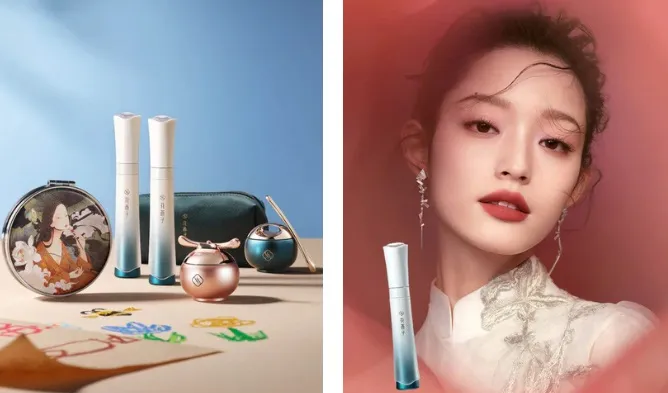
By 2026, C-Beauty has matured. The early discount positioning is gone. Brands like Florasis (花西子) now retail lip products at 200-400 RMB. Hedone and Marie Dalgar compete directly with MAC and Urban Decay on quality and price. The “made in China” stigma in cosmetics is functionally dead among consumers under 35.
Key drivers in 2026:
- Chinese herbal and TCM ingredient claims resonate strongly post-pandemic (consumers prioritize skin health)
- Gen Z prefers brands that reflect Chinese cultural identity (“guochao” wave)
- Lower-tier city consumers (tier 3-5) are the growth engine, and C-Beauty reaches them through e-commerce and livestreaming
- C-Beauty brands move faster: 4-6 week product launch cycles vs. 18-24 months for multinationals
YUMEE and the Rise of Chinese Luxury Beauty
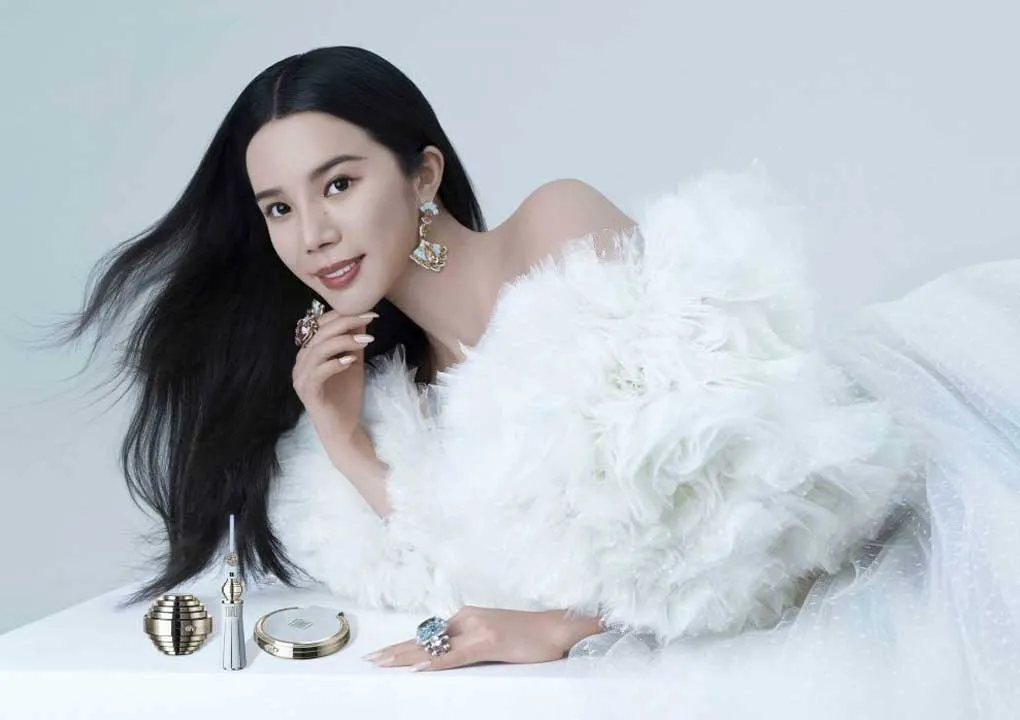
YUMEE, created by investor and entrepreneur Wendy Yu, was one of the first C-Beauty brands to explicitly target the luxury segment. Launched in 2021, YUMEE positioned its lipsticks and eye shadows between 350 and 650 RMB, directly competing with Chanel, Dior, and Guerlain.
The brand made several smart choices from the start. First, the name: “YUMEE” sounds international and is easy to pronounce in English and Mandarin. Second, cruelty-free certification was built into the brand from day one, not added later as a PR move. Third, the launch sequence was designed for the Chinese digital ecosystem, not adapted from a Western playbook.
Wendy Yu herself is a credible figure. Recognized by Forbes China’s “30 Under 30” and by Vogue as a patron of fashion, she carries real cultural weight. Her background through Yu Holdings, which connects East and West through fashion, capital, and culture, gave YUMEE instant access to media coverage and KOL networks that most new brands spend years building.
In 2026, YUMEE’s approach serves as a model for any beauty brand, local or foreign, entering the Chinese luxury segment. The lesson: brand story matters as much as product. Chinese luxury consumers do not buy ingredients. They buy identity.
The C-Beauty Competitive Field
The market has consolidated since 2021. Here are the main players competing in the C-Beauty space today:
- Perfect Diary (完美日记): Now operates 200+ offline stores. Its parent company Yatsen also owns Eve Lom and Galénic. Revenue exceeded 5 billion RMB in 2025.
- Florasis (花西子): The premium player. Known for its carved floral packaging and TCM ingredient positioning. Strong on Xiaohongshu and Douyin. International distribution launched in Japan and Southeast Asia in 2024.
- Proya (珀莱雅): Skincare-first brand that overtook L’Oréal Paris in several Tmall skincare categories in 2025. Science-backed messaging, popular with 25-35 demographic.
- Marie Dalgar (玛丽黛佳): Strong in makeup artistry positioning. Consistent KOL collaboration model.
- Hedone: Indie luxury positioning, smaller scale but high brand equity among beauty insiders.
- YUMEE: Luxury segment, celebrity-founder credibility, international ambitions.
The competition is intense. China is still the most competitive beauty market globally. Foreign brands face 7-10x more competitors than in their home markets. C-Beauty brands have the home advantage in distribution knowledge, speed, and cultural alignment.
The Digital Strategy That Works for Beauty in China
YUMEE’s original three-channel launch sequence (Xiaohongshu, then WeChat, then Tmall) remains the right model in 2026. But execution details have shifted significantly.
Xiaohongshu (Little Red Book)
Xiaohongshu now has 300 million monthly active users, with 78% female. The platform has become the primary product discovery channel for beauty in China, ahead of Douyin for considered purchases. Brands that win on Xiaohongshu in 2026 combine three elements: KOC seeding (micro-influencers with 5,000-50,000 followers), authentic user reviews, and consistent brand account publishing.
YUMEE’s early seeding strategy, sending products to KOCs before the official launch, created organic buzz that paid media cannot replicate. The typical seeding program for a beauty launch involves 80-150 KOCs, 2-3 weeks of pre-launch content, and a coordinated drop date. Results: 40-70% reduction in paid acquisition cost during the first 30 days.
WeChat for Brand Depth
WeChat remains essential for brand-building beyond awareness. In 2026, the priority is the WeChat Mini Program, not just the official account. Brands use Mini Programs for loyalty programs, product consultations, skin diagnostic tools, and private traffic management.
Lower-tier city consumers (tier 3-5, representing 60% of China’s population) rely on WeChat more than any other platform. If your brand exists on Xiaohongshu but not on WeChat, you are invisible to a massive segment.
Douyin for Reach and Conversion
Douyin (Chinese TikTok) has surpassed Tmall as the top beauty sales channel for several categories in 2025-2026. Livestreaming commerce on Douyin generated over 800 billion RMB in beauty GMV in 2025. Brands like Florasis and Proya run daily livestream sessions with dedicated beauty hosts.
For a new brand, Douyin advertising combined with a structured KOL program is the fastest way to generate trial and first purchases. See our full breakdown of KOL strategy for China to understand how to structure paid vs. organic influencer investment.
Tmall for Premium Positioning
Tmall remains the benchmark for brand credibility in China. Having a Tmall flagship store signals seriousness to Chinese consumers. For luxury beauty brands, the Tmall Luxury Pavilion remains the gold standard. Entry requires a formal application, brand history, and volume commitments. But once approved, the Luxury Pavilion offers premium visual formats, VIP customer data, and access to Alibaba’s high-net-worth user segments.
Brands targeting mass or mid-market should also evaluate Tmall’s standard flagship alongside JD Beauty and Douyin Shop. In 2026, a multi-channel e-commerce presence is not optional.
5 Key Trends Shaping C-Beauty
- TCM 2.0: Beyond ginseng and pearl powder. Brands now use patented Chinese herbal extracts with clinical data to compete with Western dermocosmetics.
- Guochao aesthetics: Products designed around Chinese cultural symbols, palace patterns, calligraphy. Florasis’s carved compacts are the benchmark.
- AI-personalization: Skin analysis tools via Mini Program or in-store device that recommend specific products. Proya and L’Oréal China both launched AI skin diagnostic systems in 2025.
- Carbon and clean claims: “Clean beauty” now requires third-party certification to be credible. Chinese consumers have become skeptical of unverified claims after several high-profile ingredient fraud cases in 2024.
- International expansion: Top C-Beauty brands are moving into Southeast Asia, Japan, and the Middle East. Florasis opened in Tokyo in 2024. This creates cross-border awareness that feeds back into domestic premium perception.