Live-Streaming in China: Top 10 Live-Streaming Apps for Beauty Brands
8 min read
On this page
- Overview Of Chinese E-commerce Landscape
- Who Are The Online Shoppers In China?
- Live Streaming Industry
- Top 10 Live-Streaming Apps for Beauty Brands in China
- 1. Douyin
- 2. Taobao Live
- 3. Xiaohongshu (Little Red Book)
- 4. Kuaishou
- 5. WeChat Channels (Shipinhao)
- 6. JD Live
- 7. Bilibili
- 8. Weibo Live
- 9. Pinduoduo Live
- 10. Meituan Live
- What Changes: AI, Ingredients, and New Formats
- How To Choose The Right Platform For Your Brand
In recent years, live streaming in China has become one of the most effective ways for beauty brands to connect with Chinese consumers. The pace of change in live commerce still surprises me.
Apps like Douyin provide a unique platform for brands to showcase their products, engage with customers in real time, and drive sales. These apps allow brands to live-stream product demonstrations and tutorials, and collaborate with influencers to reach a wider audience.
By 2026, live streaming is no longer optional for beauty brands in China. It is the primary sales channel for many categories, from skincare serums to niche fragrance. If you are not streaming, you are invisible to a large portion of Chinese buyers.
Overview Of Chinese E-commerce Landscape
China’s e-commerce landscape is rapidly expanding, driven by the increasing market size and explosive growth of the beauty industry. With over a billion active internet users and 850 million mobile users, China presents a huge opportunity for brands to market their products online. Various e-commerce platforms are now available for beauty brands to sell their products in the Chinese market.
The Chinese e-commerce market exceeded 3 trillion dollars in 2024 and keeps growing. It now represents more than 60% of total retail sales in the country. Middle-class consumption grows at over 17% per year, and beauty is one of the top spending categories. In 2025-2026, live commerce accounts for roughly 20% of all e-commerce revenue in China.
Who Are The Online Shoppers In China?
Online shopping in China involves more than 900 million people making purchases through digital marketplaces regularly in 2026. This growth comes from widespread internet and smartphone access, especially among younger consumers born after 1995.
Chinese consumers, particularly younger ones, prefer foreign brands for perceived quality and unique formulations. I see this clearly in premium skincare. Middle-class shoppers drive growth in personal care, and they rely heavily on social media influencers for product reviews and live commerce sessions. Authenticity matters more than ever. A KOL with 200,000 engaged followers often converts better than a celebrity with 10 million passive ones.
In 2026, two new behaviors define the shopper profile. First, AI-powered product discovery. Platforms now use recommendation algorithms that surface beauty products based on skin type, ingredient preferences, and past searches. Second, ingredient-led purchasing. Chinese consumers, especially the 25-35 age group, research actives like retinol, niacinamide, and peptides before buying. Live streams that explain the science behind a formula convert significantly better than streams that only show swatches.
Live Streaming Industry
The live-streaming industry in China has experienced explosive growth over the past decade. With a large population of internet users and a thriving e-commerce market, live-streaming has become both entertainment and the main shopping channel for beauty.
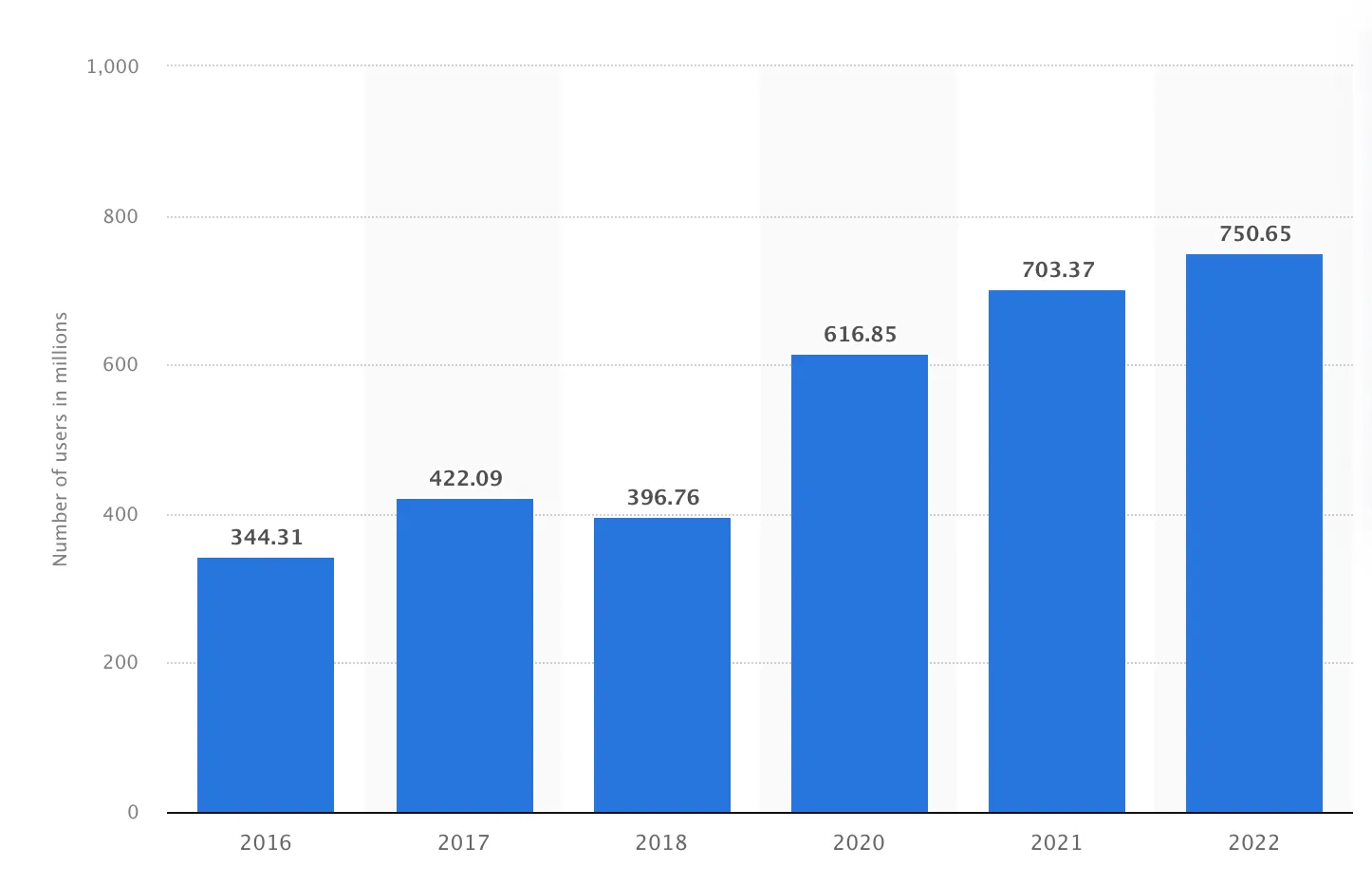
Number of live-streaming users in China from 2016 to 2022
By 2026, China counts over 800 million live-streaming users. Beauty is consistently the top category in terms of GMV generated through live sessions. Many Chinese internet users watch streams daily to interact with hosts, discover new products, and participate in virtual communities. The industry attracts content creators of every type, from independent skincare experts to brand-owned channels. The shift I’ve observed this year: brands that run their own live channels, not just KOL partnerships, are building stronger long-term loyalty.
Top 10 Live-Streaming Apps for Beauty Brands in China
Choosing the right platform depends on your target consumer, your price point, and your budget. Here is what I recommend based on what works for beauty brands today.
1. Douyin
Douyin is the dominant live-streaming platform for beauty in China. It has over 700 million daily active users in 2026. The algorithm pushes live streams aggressively to users who have shown interest in beauty content. Brands can sell directly through Douyin Shop without redirecting consumers to another platform. The key is consistency: streaming at least three times per week and working with mid-tier KOLs who specialize in skincare explanation. See our guide on Douyin advertising for beauty brands for a full breakdown.
2. Taobao Live
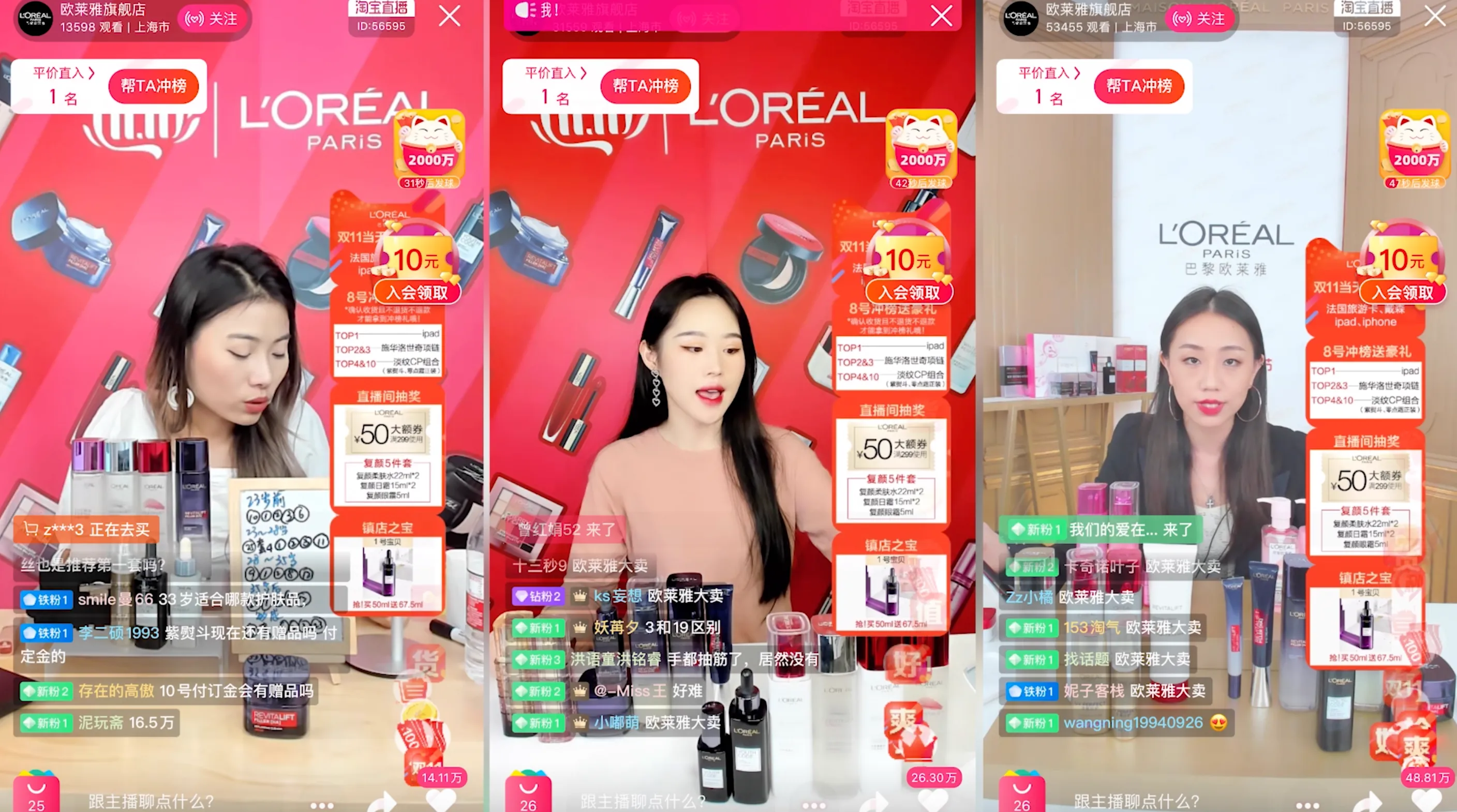
Taobao Live remains the highest-GMV platform for beauty live commerce. It connects directly to Tmall and Taobao stores. Top hosts like Li Jiaqi still generate hundreds of millions in a single stream. For brands already selling on Tmall, Taobao Live is the natural extension. The conversion rate is high because consumers can purchase without leaving the app. In 2026, Taobao Live added AI-generated product highlights that automatically clip the best moments from a stream and push them as short videos to potential buyers.
3. Xiaohongshu (Little Red Book)
Xiaohongshu has grown into a serious live-commerce platform for beauty. It started as a review app, but in 2025-2026 it rolled out integrated shopping within live streams. The audience is predominantly female, aged 18-35, and highly engaged with skincare and makeup content. I’ve found that ingredient-focused streams perform especially well here. Consumers come ready to learn. They ask questions about formulations, certifications, and sourcing. Brands that answer these questions during a live session build real credibility. Learn more about Xiaohongshu marketing for cosmetics brands.
4. Kuaishou
Kuaishou is Douyin’s main rival. It has a slightly older and more price-sensitive audience, concentrated in tier-2 and tier-3 cities. For mass-market beauty brands and brands targeting consumers outside of Shanghai and Beijing, Kuaishou is worth serious attention. The platform has over 400 million daily active users. Live-streaming hosts on Kuaishou tend to have strong personal relationships with their followers, which drives repeat purchase behavior.
5. WeChat Channels (Shipinhao)
WeChat Channels is the video and live-streaming feature inside WeChat. It integrates with WeChat Mini Programs, which means brands can drive live viewers directly to a branded shop without leaving WeChat. For brands targeting older consumers (35+) or corporate gifting segments, WeChat Channels is increasingly relevant. In 2026, Tencent invested heavily in the live-commerce infrastructure for Channels, and adoption is growing fast among established beauty brands.
6. JD Live
JD Live is the live-streaming arm of JD.com. It targets a more premium, trust-sensitive consumer. JD has built a reputation for authentic products, which matters in beauty where counterfeiting is a concern. Brands selling high-ticket skincare or medical-grade cosmetics find JD Live converts well because consumers trust the sourcing. The platform also allows brands to connect live streams directly to JD flagship store promotions.
7. Bilibili
Bilibili targets the Gen Z audience. It started as an animation and gaming platform but has diversified into beauty content. Streams on Bilibili tend to be longer and more educational. Beauty brands that do well here invest in tutorial-style content and detailed skincare routines. The audience is not primarily looking to buy immediately, but brand awareness built on Bilibili converts on other platforms later. Think of it as a top-of-funnel channel.
8. Weibo Live
Weibo Live connects to China’s largest public social network. It works well for celebrity-driven beauty launches and brand announcements. When a brand launches a new product with a celebrity host, Weibo Live creates real-time buzz that spreads organically across Weibo feeds. I recommend it as part of a campaign launch strategy rather than as a standalone sales channel.
9. Pinduoduo Live
Pinduoduo is known for aggressive pricing and group-buying mechanics. Its live-streaming function suits brands that want to move volume quickly or liquidate older inventory. The audience is price-driven. For premium beauty brands, Pinduoduo Live can damage brand perception if used carelessly. But for accessible skincare and haircare brands targeting tier-3 and tier-4 cities, it opens a large and growing market.
10. Meituan Live
Meituan is primarily a food delivery and local services platform, but its live-streaming function has expanded into beauty and personal care. It works particularly well for beauty services, spa promotions, and salon-linked product sales. Brands selling products through offline retail partners can use Meituan Live to drive consumers to physical stores while also capturing online orders.
What Changes: AI, Ingredients, and New Formats
Three shifts define live-streaming for beauty in 2026. First, AI-assisted discovery. Platforms now use machine learning to match live streams with consumers based on skin concerns, past purchases, and browsing patterns. Brands that structure their streams around specific skin concerns, not just product names, get better algorithmic distribution.
Second, ingredient transparency. The 25-35 demographic does not buy claims anymore. They research. Streams that explain why a formula contains a specific active, and what clinical data supports it, outperform glossy promotional streams.
Third, short-form to live funnels. The winning approach in 2026 is to use Douyin short videos and Xiaohongshu posts to attract viewers, then convert them inside a live stream. Brands that treat live streaming as a standalone channel miss the full picture. The funnel starts with content discovery and ends with a purchase inside the stream.
If you want to understand how KOL marketing in China connects to your live-streaming strategy, that link covers the full picture on influencer selection and ROI measurement.
How To Choose The Right Platform For Your Brand
The platform choice depends on three factors: your price point, your target demographic, and your existing presence in China. Premium skincare brands should prioritize Douyin, Taobao Live, and Xiaohongshu. Mass-market brands add Kuaishou and Pinduoduo. Every serious beauty brand needs a presence on at least two platforms by 2026.
If you are just entering the Chinese market, start with Douyin. The algorithm rewards new accounts that produce consistent content, and the built-in Douyin Shop removes friction from the purchase process. If you already sell cosmetics in China, add Taobao Live to connect directly to your existing store traffic.
We know what production quality, streaming frequency, and KOL profiles drive results in each context. The brands that win in Chinese live commerce are the ones that treat it as a core business function, not a side experiment.