KOLs and Douyin Douyin for beauty brands
Why Makeup Brands Are Thriving on Douyin: The Beauty Boom in China
4 min read
On this page
- Six Key Success Factors
- 1. Video-First Content for Product Demonstrations
- 2. Influencer Authority
- 3. Tutorial-Driven Engagement
- 4. Livestream Shopping Economics
- 5. Algorithm-Based Targeting
- 6. Viral Trend Integration
- What the Data Shows: New Forces Reshaping the Market
- The Market Is Growing, and So Is Competition
- Douyin Has Overtaken Tmall
- Xiaohongshu Is the Trust Layer
- Four Trend Categories Driving Purchase
- Strategic Recommendations
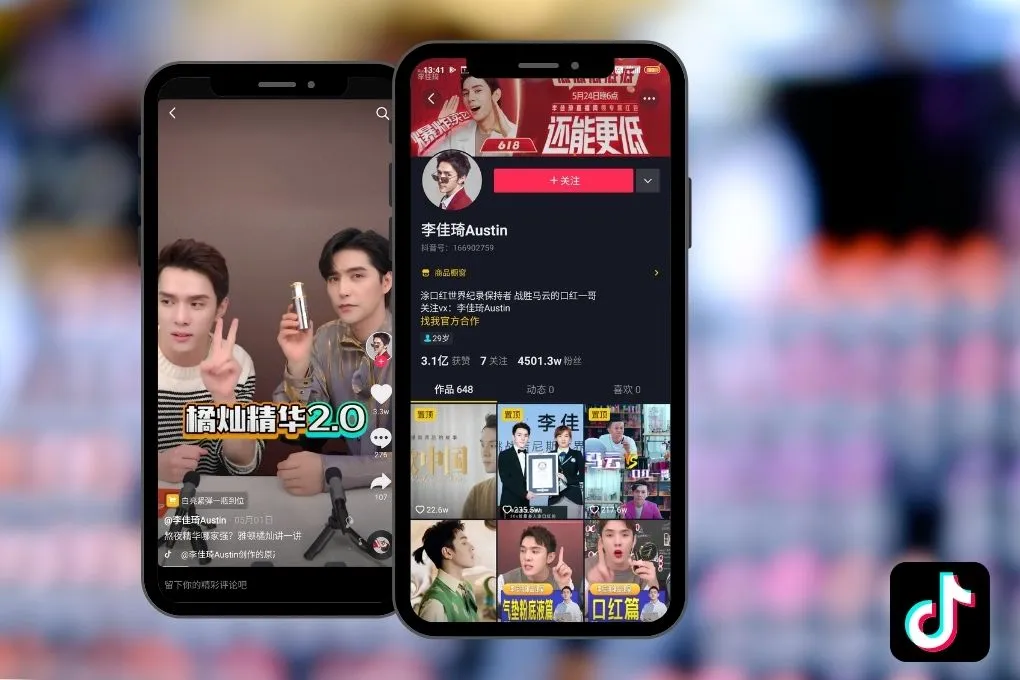
Douyin functions as China’s premier sales channel for beauty brands, transforming makeup shopping through viral tutorials and livestream commerce. The data shows that brands willing to commit to this platform’s native formats see results that traditional advertising simply cannot match. For any international brand serious about cosmetics marketing in China, Douyin is no longer optional.
Six Key Success Factors
1. Video-First Content for Product Demonstrations
Short-form videos and interactive livestreams enable customers to assess texture, color payoff, and application techniques before purchasing. Makeup transformations and before-and-after content generate rapid viral engagement.
2. Influencer Authority
Key Opinion Leaders (KOLs) wield substantial influence over beauty trends. Single endorsements can deplete inventory within hours. Key Opinion Consumers (KOCs) simultaneously drive authentic peer recommendations through honest reviews. Building a structured KOL marketing strategy in China across both tiers is now standard practice for brands generating consistent revenue on Douyin.
3. Tutorial-Driven Engagement
Chinese consumers prioritize practical beauty tutorials. Trending aesthetics like “glass skin” and “gradient lips” generate substantial engagement and purchasing urgency by showcasing real-world product application.
4. Livestream Shopping Economics
Livestream commerce converts 3 to 5 times more effectively than traditional e-commerce. Real-time demonstrations, viewer questions, and exclusive limited-time promotions drive conversion.
5. Algorithm-Based Targeting
Douyin’s recommendation system directs products to relevant audiences based on viewing behavior, ensuring maximum visibility to interested consumers.
6. Viral Trend Integration
Beauty trends proliferate rapidly on the platform. Products positioned within trending aesthetics achieve rapid sell-through.
What the Data Shows: New Forces Reshaping the Market
The Douyin playbook that worked in 2023 and 2024 is not enough on its own in 2026. The market has matured, consumer behavior has shifted, and new platform dynamics are changing where and how purchases happen. Here is what the current data shows.
The Market Is Growing, and So Is Competition
China’s cosmetics retail market reached RMB 465.3 billion in 2025, up 5.1% year-on-year. That momentum has carried into 2026, with sales from January to April rising 5.6% compared to the same period last year. Online channels now account for 65.4% of all beauty transactions. The market is growing, but so is pressure from domestic brands.
C-Beauty (domestic Chinese beauty brands) now holds 57.4% of the market, its fifth consecutive year of share gains. Brands like Proya, Florasis, Winona, and Maogeping have moved well beyond price competition. They invest in formulation, heritage storytelling, and clinical validation. C-Beauty players now spend an average of 3.24% of revenue on R&D. International brands that rely on brand heritage alone are losing ground.
Douyin Has Overtaken Tmall
In 2025, Douyin generated RMB 270 billion in beauty GMV, surpassing Tmall’s RMB 221 billion. This is a structural shift, not a temporary spike. Douyin now drives both discovery and first purchase. Tmall and JD.com remain critical for clinical validation, repeat purchases, and category credibility, but the entry point for most beauty consumers is now a video or a livestream.
Running only one without the other creates gaps in the funnel that competitors fill immediately.
Xiaohongshu Is the Trust Layer
Xiaohongshu (XHS/Little Red Book) has cemented its role as the research and validation layer before purchase. Beauty conversations on the platform carry 65.99% positive sentiment. The appreciation emotion index for beauty content sits at 26.43%, more than double the platform-wide average of 10.27%. Consumers use XHS to research ingredients, compare brand narratives, and read peer reviews before committing.
A brand with no presence on Xiaohongshu is invisible to a significant portion of the purchase decision. This is where trust is built before conversion happens anywhere else.
Four Trend Categories Driving Purchase
- Efficacy and clinical proof: Consumers want substantiated claims backed by ingredient data, not just brand promises. Clinical-grade positioning is now a baseline expectation, not a differentiator.
- Emotional positioning: Products tied to mood, lifestyle, and self-expression outperform purely functional messaging. Brands framing beauty as identity are gaining traction with younger consumers.
- Wellness crossover: Scalp care, oral beauty, and outdoor-performance skincare are growing fast. The line between cosmetics and wellness is dissolving.
- Fragrance growth: Fragrance is the single fastest-growing beauty sub-category, averaging double-digit annual growth since 2018. International heritage houses still hold an advantage, but domestic players are closing the gap.
Strategic Recommendations
- Prioritize video storytelling and application tutorials on Douyin
- Collaborate with both prominent KOLs and grassroots KOCs for coverage across trust tiers
- Implement consistent livestream sales initiatives tied to platform promotions
- Deploy native advertising for precision targeting on Douyin and XHS
- Monitor emerging trends for real-time positioning
- Build XHS content to capture the research and validation phase of the funnel
Brands that want to sell cosmetics in China successfully in 2026 need to operate across the full funnel: AI search for early discovery, XHS for trust-building, Douyin for activation and purchase, and Tmall for retention.